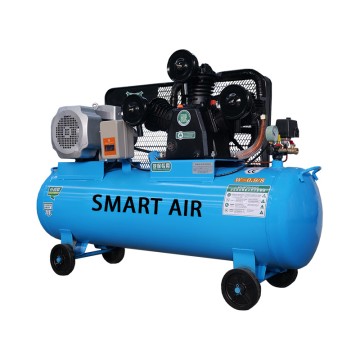
1. The Critical Role of Air Machine Compressors in the Energy, Oil, and Gas Sectors
In the demanding realm of the energy, oil, and gas industries, compressed air is not merely a utility; it is the lifeblood of day-to-day operations. From offshore drilling platforms operating in tempestuous seas to remote onshore pipelines crossing deserts, and down to complex refinery complexes processing crude hydrocarbons, the air machine compressor plays a pivotal role. These industrial machines provide the energy required to power pneumatic controls, control valves, safety systems, and process-critical tools.
Unlike standard commercial setups, air compressors deployed in the oil and gas field must meet stringent engineering standards. They are subjected to harsh ambient temperatures, corrosive marine air, dust, and explosive environments. Consequently, the selection of an air machine compressor for energy applications requires a deep understanding of thermodynamics, material science, and safety protocols to ensure uninterrupted uptime, high efficiency, and absolute operational safety.
Key Industry Drivers:
Continuous uptime requirements, stringent emission regulations, the integration of smart IoT remote diagnostics, and the ongoing demand for explosion-proof certifications (such as ATEX or IECEx) are driving the development of the next generation of industrial screw air compressors.
2. Upstream, Midstream, and Downstream: Deep-Dive Application Scenarios
Upstream: Offshore Rigs and Onshore Drilling Fields
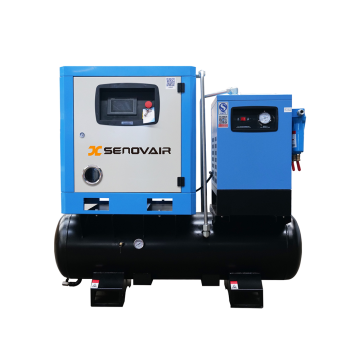
In upstream operations, exploration and extraction processes rely heavily on heavy-duty compressed air. On offshore oil rigs, space is at a premium. This has accelerated the demand for integrated, compact machinery. A compact 4-in-1 screw air compressor—combining the compressor, air dryer, high-efficiency filtration, and a receiver tank on a single skid—is highly valued here.
Upstream applications include:
-
Pneumatic Control Systems: Powering critical safety shutdown valves (ESD), control loops, and remote telemetry units that manage oil well pressure.
-
Motion Compensation Systems: Using high-pressure air to stabilize drill strings and tensioners against the constant swell of ocean waves.
-
Nitrogen Generation: Compressed air is fed into nitrogen membranes to produce high-purity nitrogen gas, which is used to purge drilling wells, preventing combustion and ensuring explosion-proof environments.
Midstream: Pipeline Transmission and Gas Storage
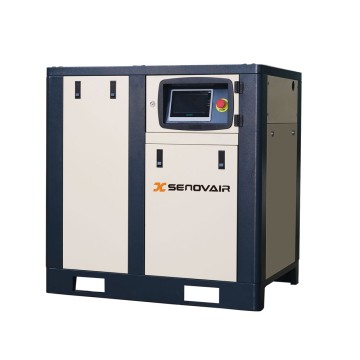
Once hydrocarbons are extracted, they must be transported safely across thousands of miles of pipelines. Midstream facilities utilize large compressor stations to maintain pipeline pressure. Here, 7.5kw to 200kw oil-lubricated PM VSD screw air compressors are frequently utilized to provide instrument air for pipeline monitoring systems and remote control valves.
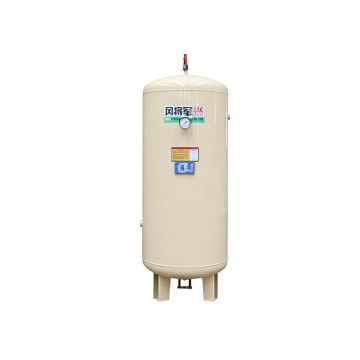
Additionally, air storage tanks are vital in midstream operations. They act as pressure buffers to accommodate sudden drops in demand and supply immediate air volume during emergency valve operations. These storage vessels must be manufactured to withstand extreme pressure fluctuations and comply with local pressure vessel certifications.
Downstream: Refineries and Petrochemical Processing Plants
Downstream refining is a highly complex chemical process where crude oil is distilled into gasoline, diesel, jet fuel, and petrochemical feedstocks. In these plants, air quality is of paramount importance. Even a minor trace of oil or moisture in the instrument air line can contaminate catalyst beds, freeze control lines, or damage delicate pneumatic valves, leading to catastrophic plant shutdowns costing millions of dollars per day.
Refineries rely on robust air compression systems to supply dry, filtered air for:
-
Catalyst Regeneration: Supplying oxygen-rich air to burn off carbon deposits from catalysts during the refining process.
-
Soot Blowing: Utilizing high-pressure air bursts to keep heat exchangers and boiler tubes clean of soot buildup, maintaining thermal efficiency.
-
Product Conveying: Transporting catalyst powders and solid chemical raw materials through pneumatic conveying systems.
3. Industrial Status, Challenges, and Market Dynamics
The global energy sector is undergoing a massive transformation. Volatile oil prices, geopolitical pressures, and strict carbon neutrality targets are forcing operators to re-evaluate their operational expenses (OPEX). Traditionally, the oil and gas industry prioritized reliability over energy efficiency. Today, however, energy efficiency is a key metric.
Industrial air compressors consume a significant portion of a plant's total electrical footprint. As a result, the market is rapidly moving away from fixed-speed compressors toward Permanent Magnet Variable Speed Drive (PM VSD) screw air compressors. By adjusting the motor speed in real-time to match the actual air demand, PM VSD technology can reduce energy consumption by up to 35% to 50% compared to conventional compressors. This not only lowers utility bills but also directly reduces the carbon footprint of the facility.
Furthermore, the harsh environments of remote oilfields present unique maintenance challenges. Equipment must operate reliably in temperatures ranging from -40°C in Siberian oilfields to +55°C in Middle Eastern deserts. Dust, sand, and humidity require advanced filtration systems and heavy-duty enclosure designs to prevent premature wear of the compressor's air end and electrical components.
4. Future Technological Trends in Energy Air Compressors
Smart Integration and IoT Diagnostics
The integration of the Internet of Things (IoT) is revolutionizing how oilfield equipment is managed. Modern screw air compressors are equipped with intelligent microprocessors and sensors that monitor critical parameters such as vibration, discharge temperature, pressure drops across filters, and electrical load.
Through cloud connectivity, operators can remotely monitor their entire compressor fleet from a centralized control room. Predictive maintenance algorithms analyze this telemetry data to detect anomalies before they cause a machine failure. For instance, a slight rise in bearing temperature can trigger an automated maintenance alert, allowing technicians to replace a bearing during a scheduled shutdown rather than reacting to a catastrophic breakdown in the middle of production.
Modularity and the Rise of 4-in-1 Compact Units
As onshore shale gas extraction and offshore exploration continue to expand, plug-and-play modularity has become highly desirable. Traditional air compressor systems required separate procurement of the compressor, dryer, air filters, and receiver tank, followed by complex on-site piping, electrical wiring, and commissioning.
Modern 4-in-1 compact screw air compressors solve this bottleneck. By integrating all four components into a single, factory-tested package, operators benefit from a drastically reduced installation footprint, lower installation costs, and immediate plug-and-play operation. This is especially advantageous for mobile maintenance crews and temporary drilling camps where rapid deployment is essential.
Green Compression and Oil-Free Alternatives
While oil-lubricated compressors remain the workhorse of heavy industry due to their durability and cost-effectiveness, environmental regulations are driving interest in oil-free compression and advanced oil-separation technologies. High-efficiency oil separators and multi-stage filtration systems now allow oil-lubricated compressors to deliver air quality that meets ISO 8573-1 Class 1 or even Class 0 standards, providing a cost-effective alternative to pure oil-free machines while maintaining the rugged reliability needed for heavy industrial applications.
5. How to Choose the Right Compressor for Your Energy Operation
Selecting the appropriate compressor package requires a comprehensive audit of your operational needs:
-
Determine Air Flow (CFM/m³/min) and Pressure (PSI/Bar): Match the compressor output to the maximum load of your pneumatic tools and control systems. Over-sizing leads to energy waste, while under-sizing causes pressure drops.
-
Evaluate Environmental Conditions: If operating in hazardous zones, ensure the compressor features explosion-proof motors, anti-static belts, and spark-resistant enclosures. For coastal installations, marine-grade paint and corrosion-resistant copper-nickel coolers are essential.
-
Air Quality Requirements: Assess whether your process requires instrument-quality dry air. If so, select a system with integrated refrigerated or desiccant dryers and multi-stage coalescing filters to remove water, oil vapors, and particulates.
-
Lifecycle Cost Analysis: Consider the total cost of ownership (TCO), which includes the initial purchase price, energy consumption over 5-10 years, and routine maintenance costs. Often, investing in a high-efficiency PM VSD compressor pays for itself within the first two years of operation.
 +86 18366183241

 Contact Phone
 Contact Email