
 +86 18366183241


0102030405
5 Common Causes of Air Compressor Overheating and How to Prevent Production Downtime
2026-08-19
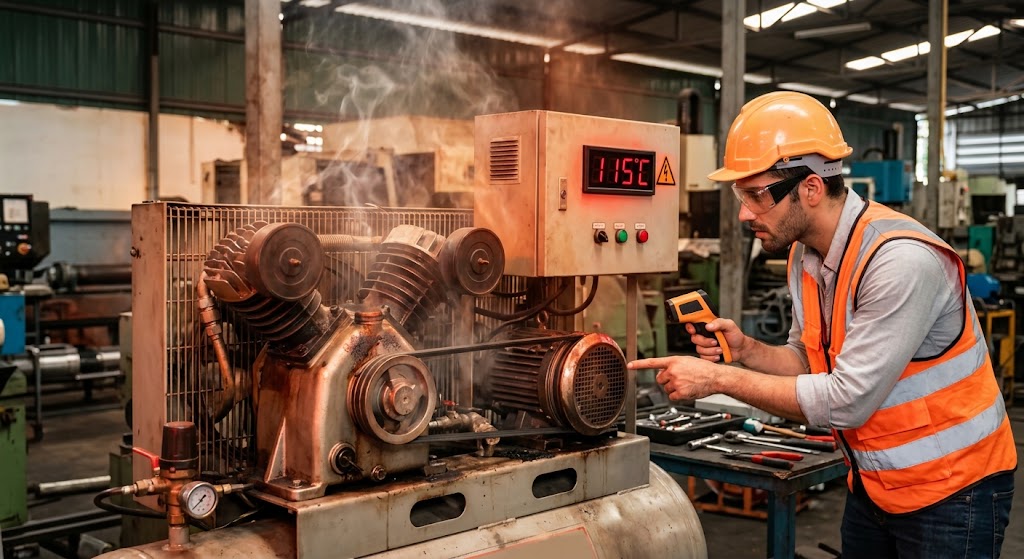
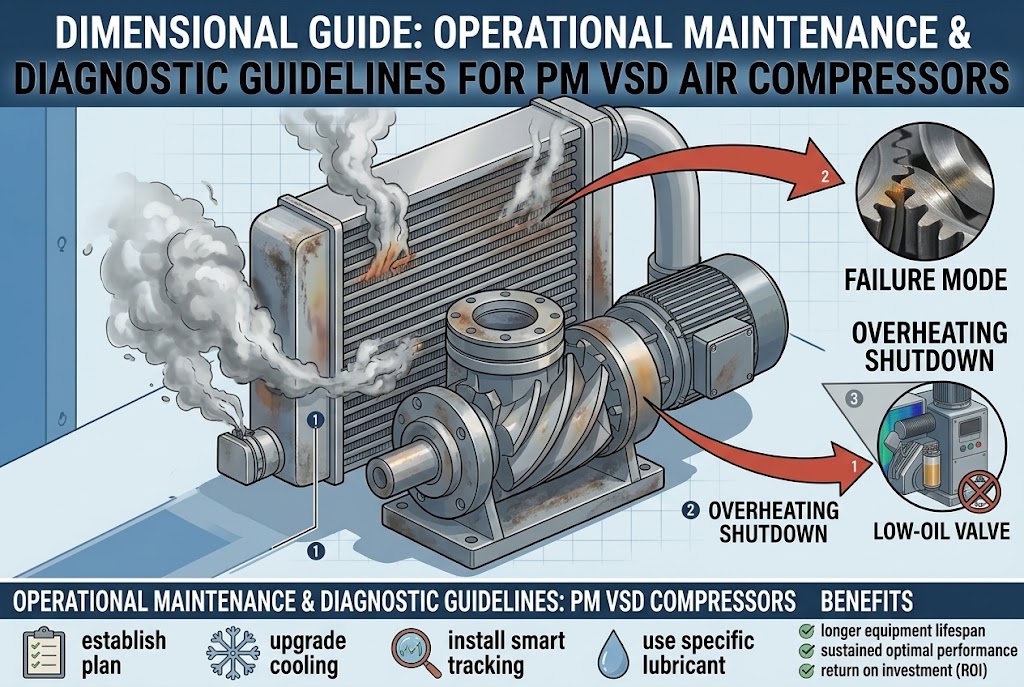
Air compressor overheating is one of the most frequent and costly issues that disrupt industrial operations across manufacturing, packaging, laser cutting, and general automation facilities. When an air compressor runs above its recommended operating temperature, it accelerates component wear, degrades lubrication performance, and can lead to unexpected shutdowns that halt entire production lines. Even a short episode of sustained high heat can shorten the service life of your equipment by months or years, increasing long-term repair and replacement costs. This article breaks down five of the most common root causes of overheating, practical steps to address them, and actionable strategies to keep your facility running reliably.
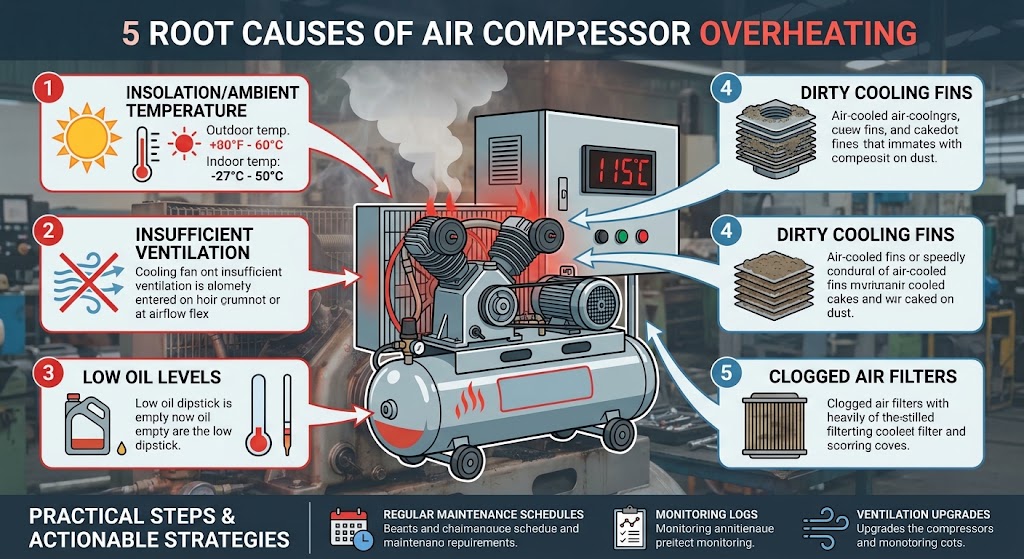
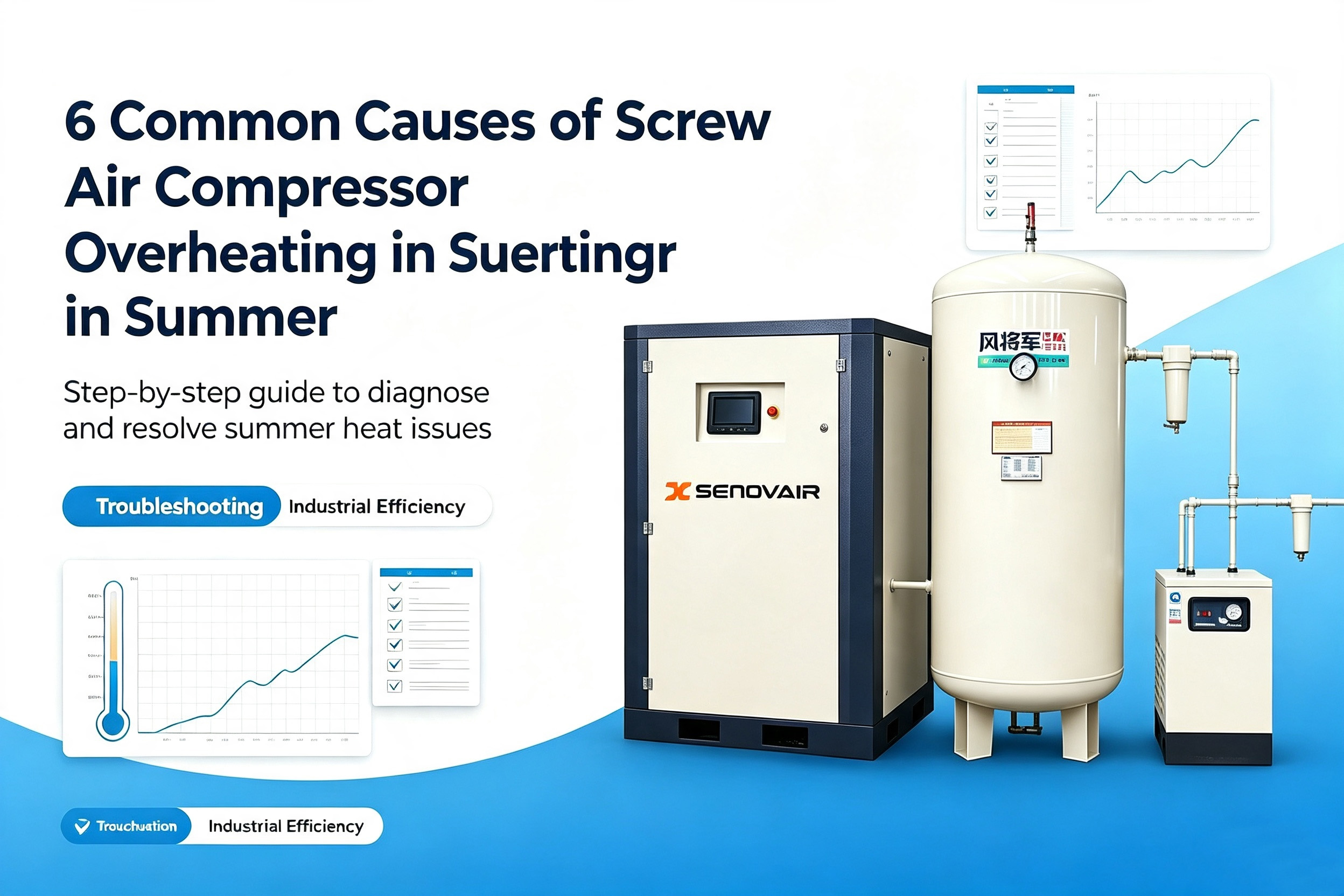
First and most frequently overlooked cause is a dirty or blocked cooler. Over weeks and months of continuous operation, dust, oil residue, and airborne debris accumulate on the cooler fins, creating an insulating layer that drastically reduces heat dissipation efficiency. For a screw air compressor operating in a high-dust workshop, even a thin layer of grime can push internal temperatures well above the manufacturer’s recommended threshold. To prevent this, schedule monthly visual inspections of the cooler, use low-pressure compressed air to blow away surface dust, and perform a deeper professional cleaning every 3 to 6 months to remove stubborn oil buildup.
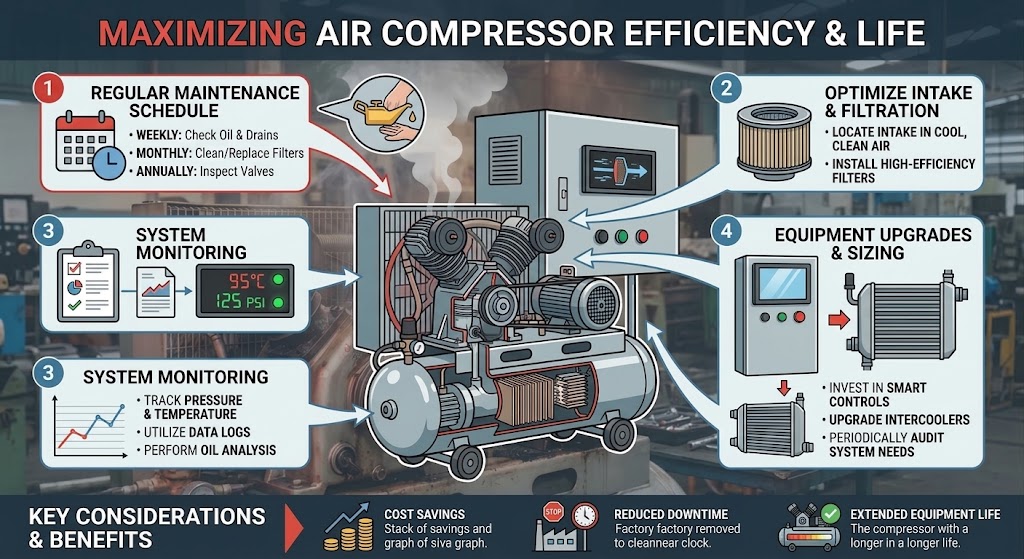
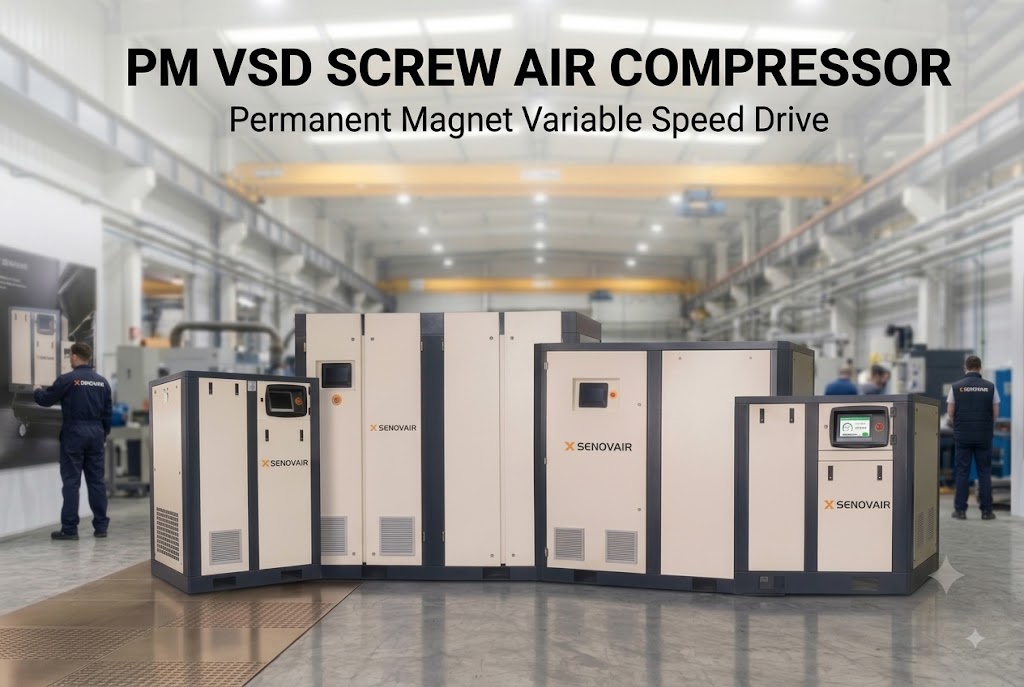
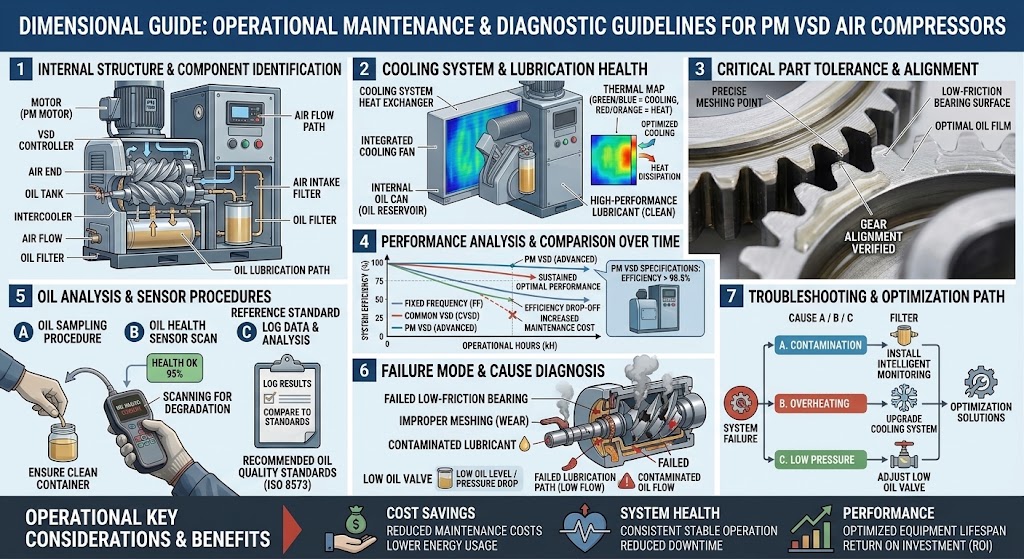
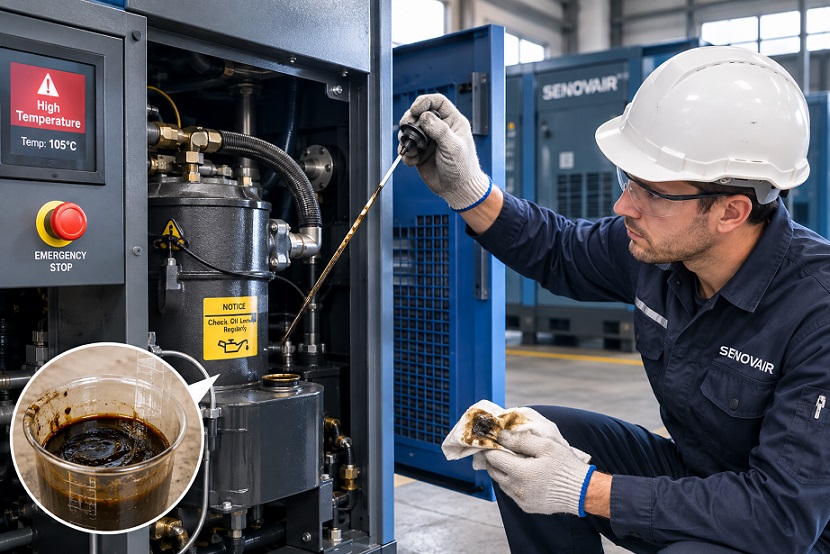
Second, low or deteriorated lubricating oil is a direct trigger for excessive internal friction and rising temperatures. If the oil level drops below the minimum mark, or if the lubricant has aged and lost its heat-dissipation and anti-wear properties, metal components inside the unit will rub against each other, generating massive amounts of excess heat. This risk applies equally to a standard fixed-speed unit and a PM VSD screw air compressor, as even high-efficiency variable-speed models rely on consistent lubrication to maintain optimal operating conditions. Establish a strict routine to check oil levels weekly, follow the manufacturer’s recommended oil change intervals, and always select lubricants formulated specifically for your air compressor model.
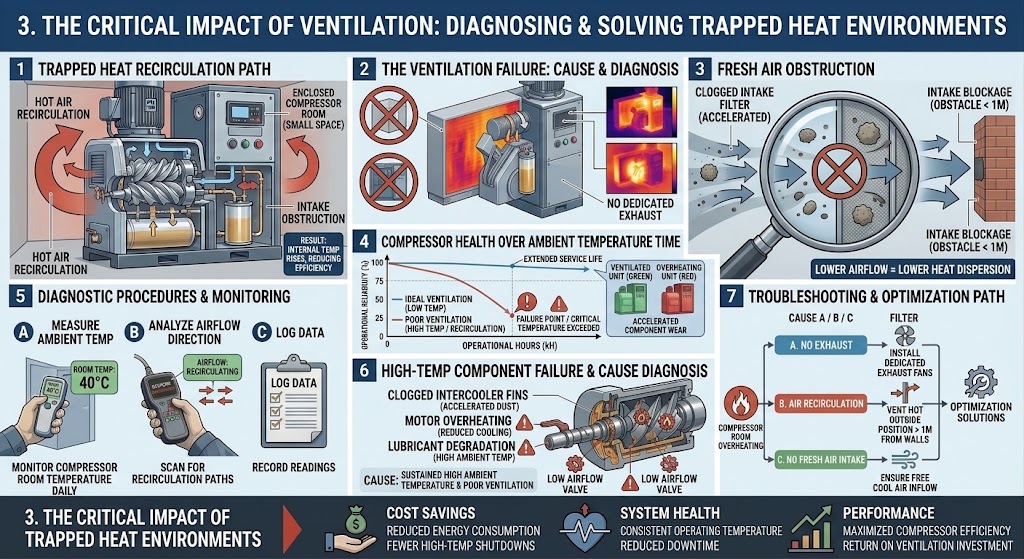
Third, poor ventilation or sustained high ambient temperature in the compressor room creates a trapped heat environment where the unit can never expel waste heat effectively. Many facilities place their equipment in small, enclosed spaces with no dedicated exhaust, causing hot air discharged from the cooler to recirculate directly back into the unit’s intake. To resolve this, install dedicated exhaust fans to vent hot air outside, ensure fresh cool air can flow freely into the room, and position the air compressor at least one meter away from walls or other obstacles that block airflow.
Fourth, continuous overloading or incorrect compressor sizing forces the unit to operate beyond its designed capacity for extended periods. If your facility’s actual air demand consistently exceeds the maximum output of your selected model, the machine will run at full load nonstop, rapidly building up excess heat. Many facilities that expanded production later find their original unit is no longer a good match for current demand. Upgrading to a PM VSD screw air compressor that automatically adjusts output to match real-time air use can eliminate unnecessary full-load runtime and drastically reduce overheating risk.
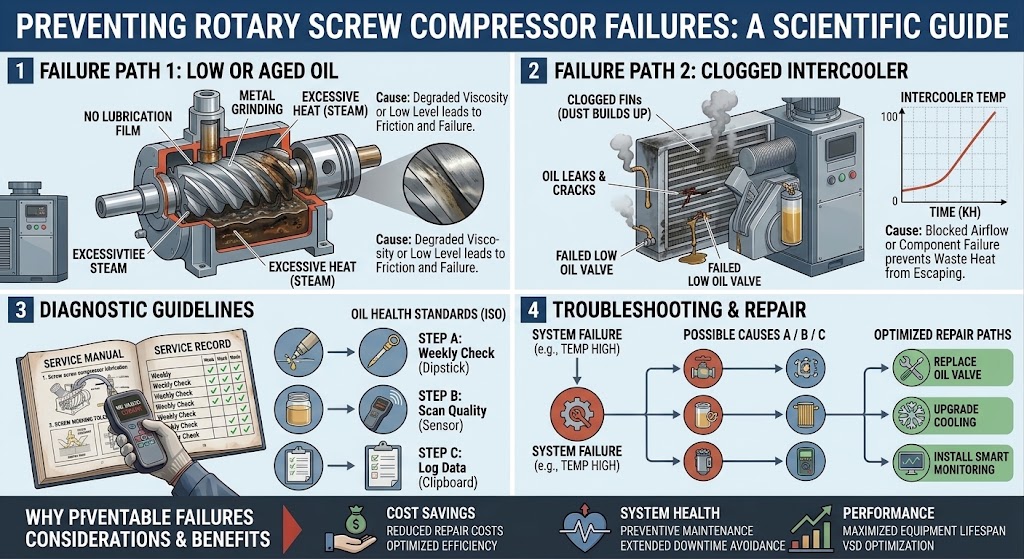
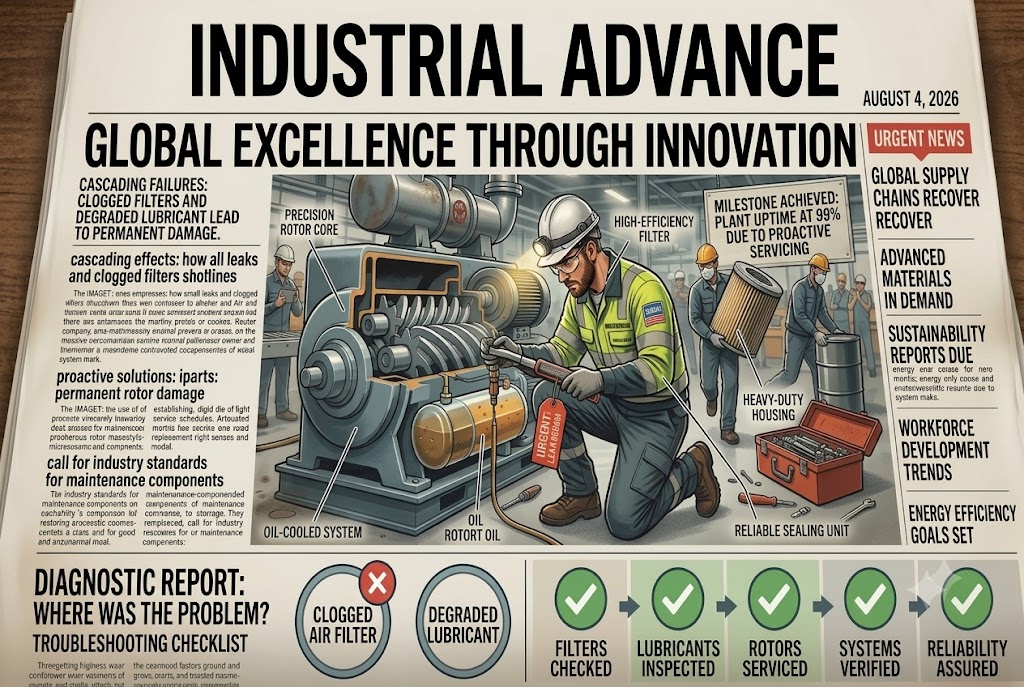
Fifth, clogged filters and inconsistent maintenance create unnecessary system resistance that forces the air compressor to work harder than it needs to. When air filters, oil filters, or oil separators become blocked with contaminants, internal pressure differentials rise, driving up energy consumption and operating temperature. A structured, documented maintenance plan that includes scheduled filter replacements is one of the simplest and most effective ways to avoid preventable overheating events.
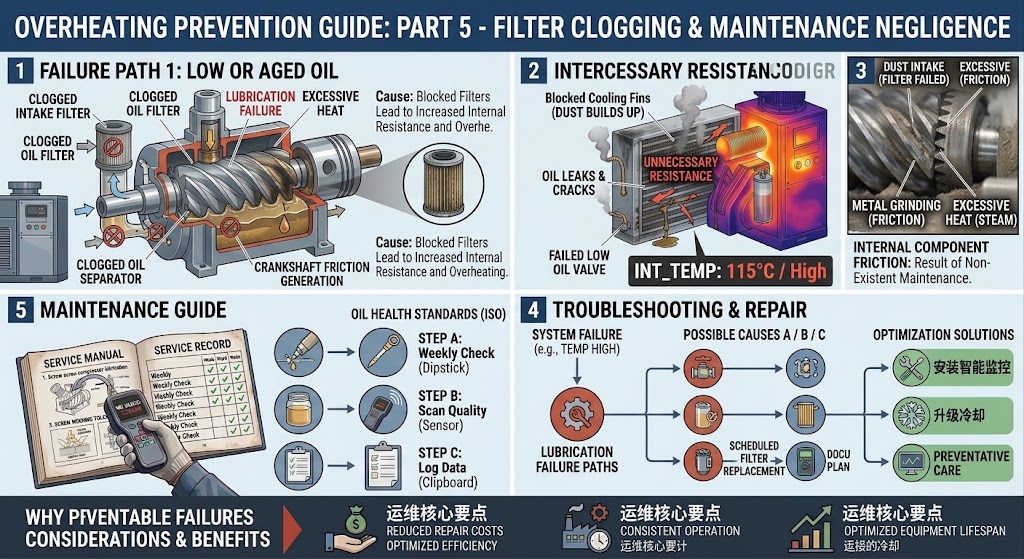
Before a full shutdown occurs, your equipment will almost always show clear warning signs: steadily rising discharge temperature, repeated over-temperature alarms, unplanned emergency stops, unexpected spikes in energy consumption, and unusual grinding or rattling noises during operation. Recognizing these signals early can help you resolve small issues before they turn into costly downtime.
To prevent unplanned production stops entirely, combine regular preventive maintenance with continuous temperature monitoring, keep compressor rooms well-ventilated, perform periodic air leak checks to eliminate wasted air, and always select your screw air compressor based on your facility’s actual working pressure, flow demand, and ambient operating conditions.
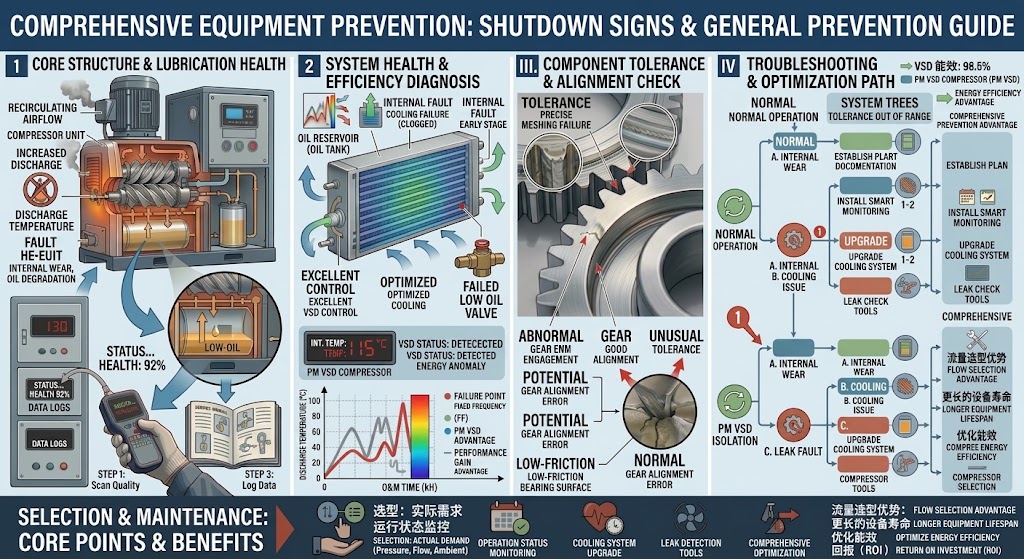
By addressing these five common causes, industrial operators can drastically reduce the risk of air compressor overheating, extend equipment service life, and maintain stable, uninterrupted production. A well-maintained PM VSD screw air compressor, matched correctly to your operational needs, will not only avoid overheating issues but also deliver long-term energy savings and more consistent performance for your entire facility.