
 +86 18366183241




0102030405
Air Compressor Making Strange Noises: What Do They Mean?
2026-09-18
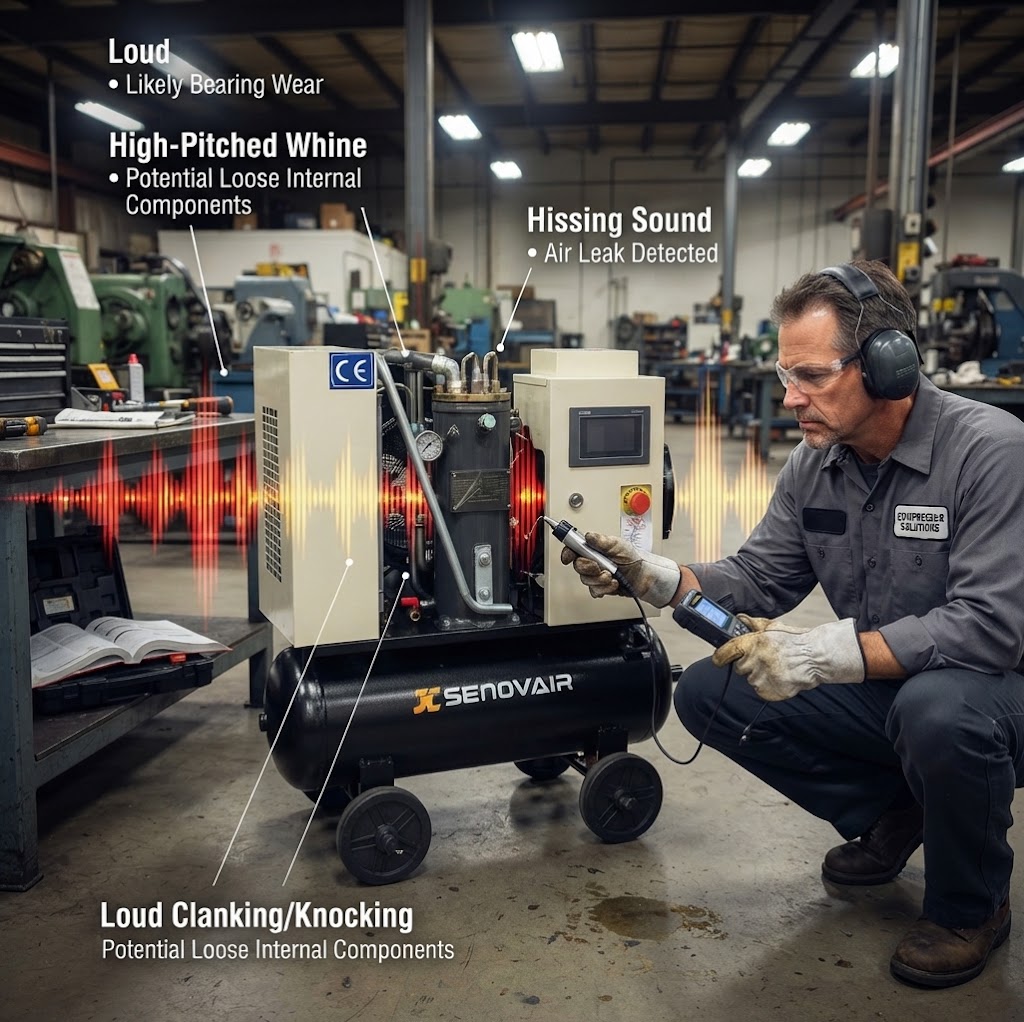
When an air compressor starts making unusual sounds during operation, it is one of the most common warning signs facility managers and equipment operators encounter. Different noises often point to distinct mechanical or operational issues that may not be visible during routine visual checks. Learning to recognize these sounds early can help operators avoid unexpected breakdowns, unplanned maintenance costs, and costly production downtime that disrupts daily workflows.
Many operators overlook subtle changes in the sound profile of their screw air compressor, assuming the noise is just part of normal wear over time. But there is a clear difference between consistent, normal operating hum and sudden, unfamiliar air compressor noise that appears without warning. Ignoring these early audio cues can allow minor issues to escalate into severe component failure, and in many cases, changes in sound are one of the first detectable indicators that something inside the system is no longer operating as intended.
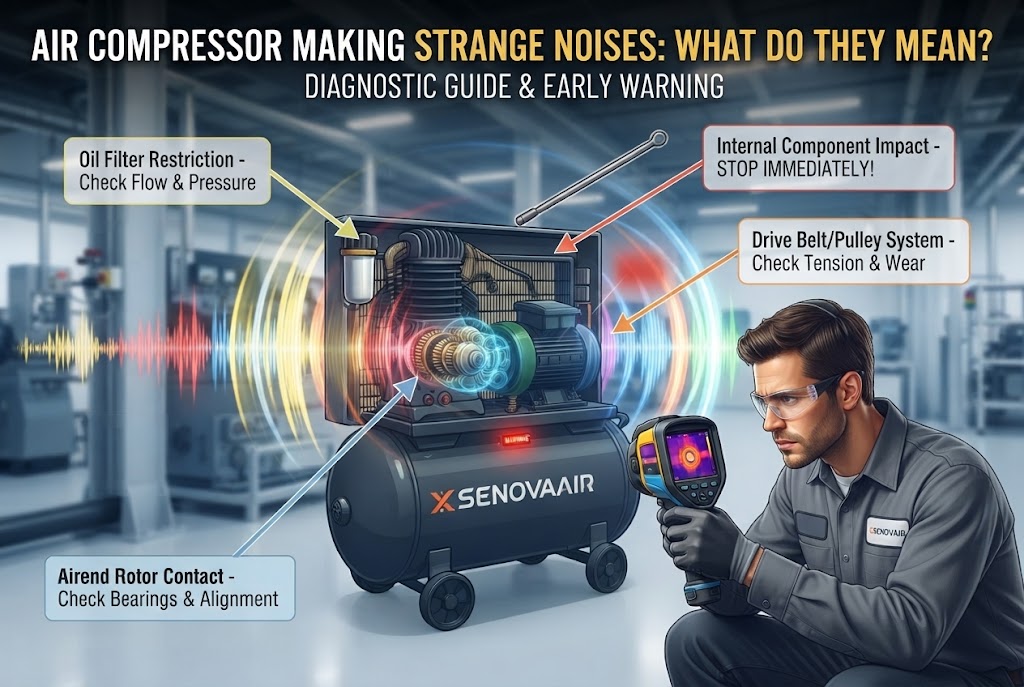
One of the most common unusual sounds is a grinding or rattling noise, which typically points to worn bearings, misaligned gears, or loose internal mechanical components inside the unit. This type of friction-driven noise rarely resolves on its own, and continuing to run the machine under these conditions can cause permanent damage to critical parts, so operators are advised to shut down the equipment safely and perform a detailed internal inspection as soon as possible.
A hissing noise usually signals a compressed air leak somewhere in the system, rather than an internal mechanical failure. This air compressor noise can originate from loose connections, damaged seals, worn valves, cracked hoses, or improperly sealed joints along the entire air delivery line. Even a small leak can reduce system efficiency over time, so it is important to trace the sound path carefully and inspect every section of piping, fittings, and flexible connections to locate and seal the source.
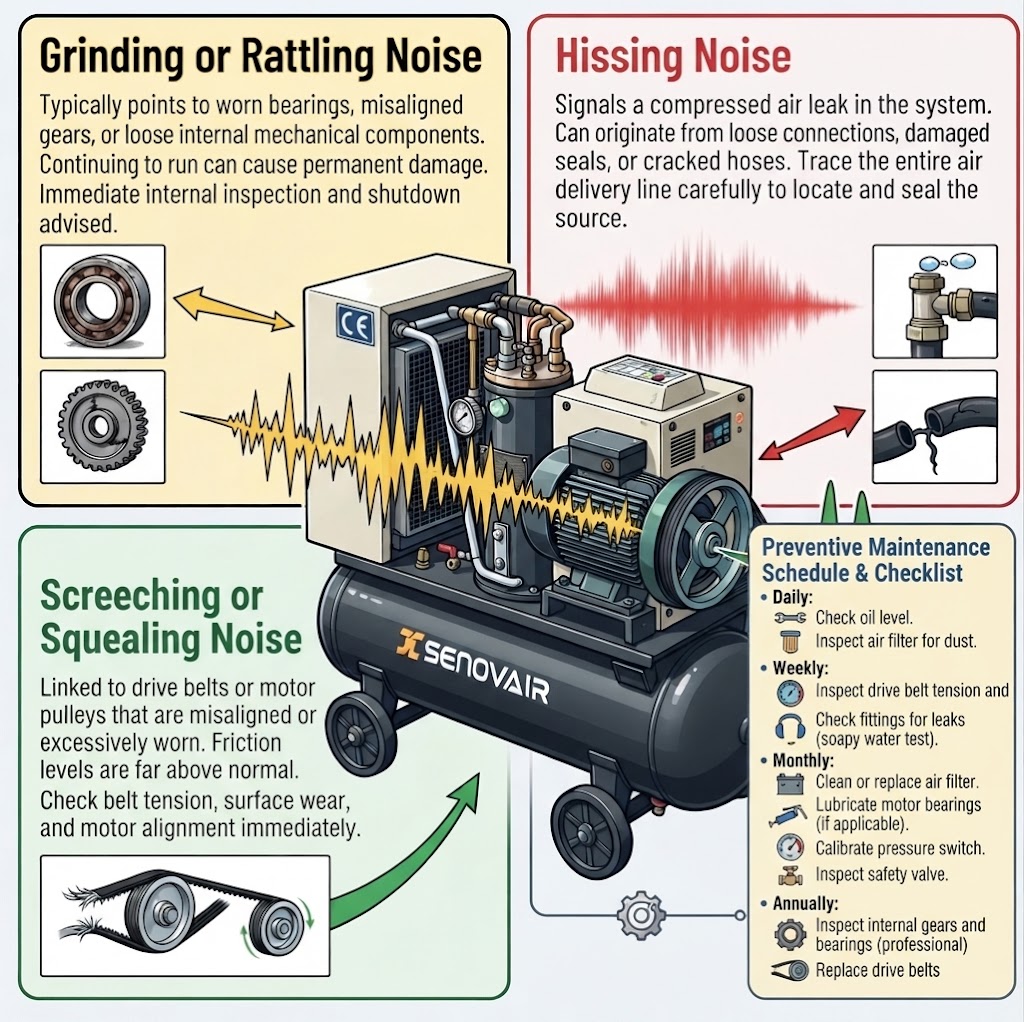
Screeching or squealing noises are most often linked to drive belts, motor pulleys, or other high-speed rotating components that have become misaligned or excessively worn. This sound frequently becomes louder during startup or under sudden load changes, and it indicates that friction levels between moving parts have risen far above normal design limits. Operators should check belt tension, surface wear, and motor alignment immediately before the issue leads to a sudden operational stop.
Knocking or banging noises represent one of the more serious air compressor noise patterns, as they usually indicate loose internal components, shifting balance weights, or unexpected mechanical impact inside the pressure-generating assembly. Any repetitive, heavy knocking sound means the equipment should be stopped immediately, because continuing operation could lead to catastrophic internal damage that requires full component replacement rather than simple repair.
Excessive vibration or persistent buzzing that travels through the frame and mounting base often relates to motor imbalance, improperly secured anchor points, worn couplings, or damaged fan blades that have accumulated dirt or lost their original balance. This issue can gradually worsen over weeks or months, and it is easy to mistake for normal operation until it begins affecting the stability of the entire unit. Operators should check mounting bolts, alignment, and rotating part balance regularly to prevent this type of noise from developing.
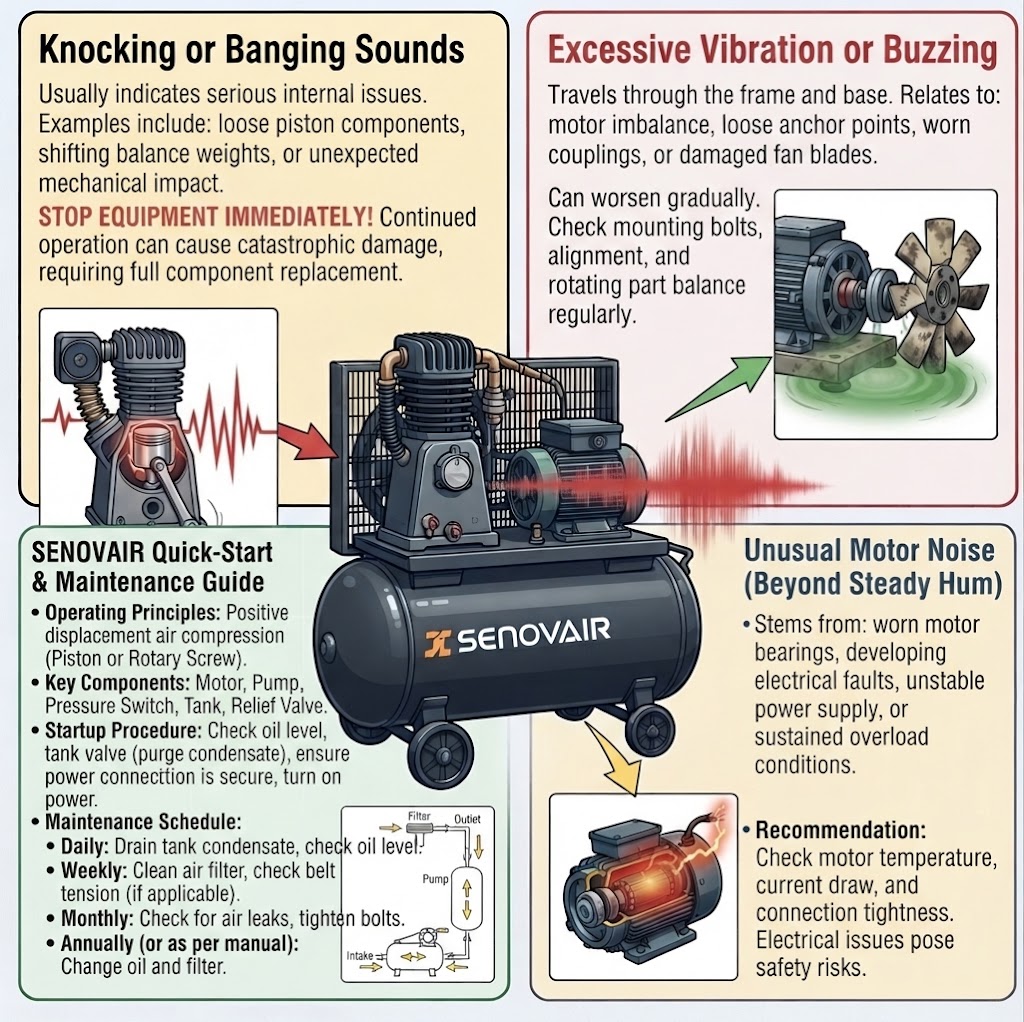
Unusual motor noise that differs from the usual steady hum can stem from worn motor bearings, developing electrical faults, unstable power supply, or the compressor running under sustained overloaded conditions. When this sound appears, it is important to check motor temperature, current draw, and connection tightness, because electrical issues inside the motor can create safety risks if left unaddressed for extended periods.
When your air compressor makes strange noises, follow a clear step-by-step process to identify and resolve the problem safely. First, clearly identify what type of noise you are hearing, and note whether it is continuous during operation or only appears intermittently under specific load conditions. Next, check the oil level and confirm all basic operating parameters, then perform a visual walkthrough of all external components, connections, and visible piping. If the noise remains severe or shows no obvious external cause, shut down the compressor immediately and contact a qualified technician to perform a deeper system diagnosis.
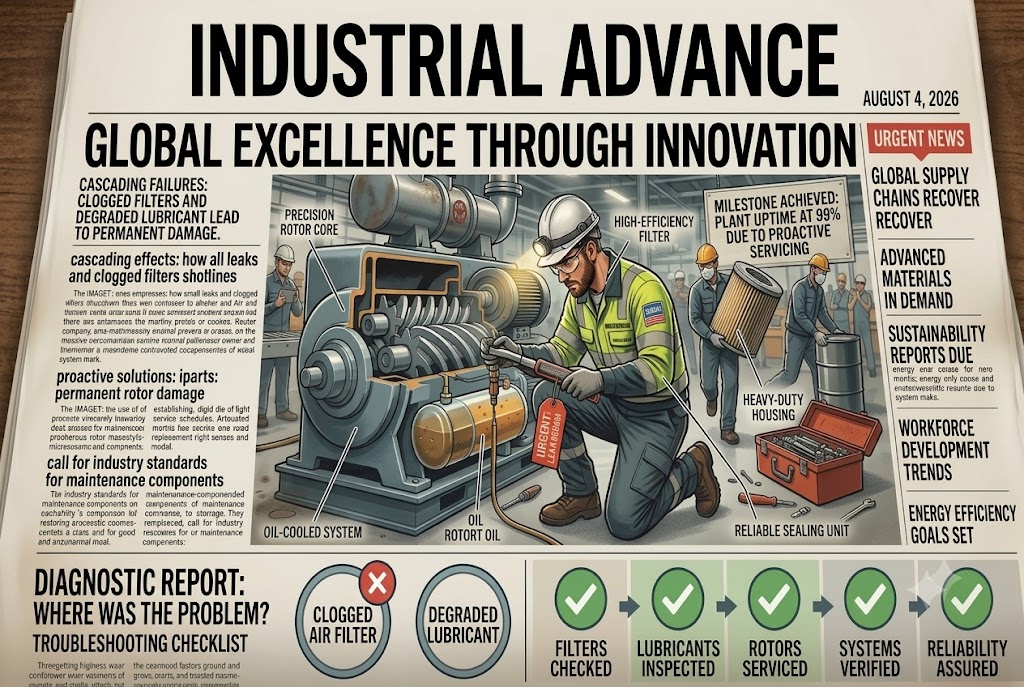
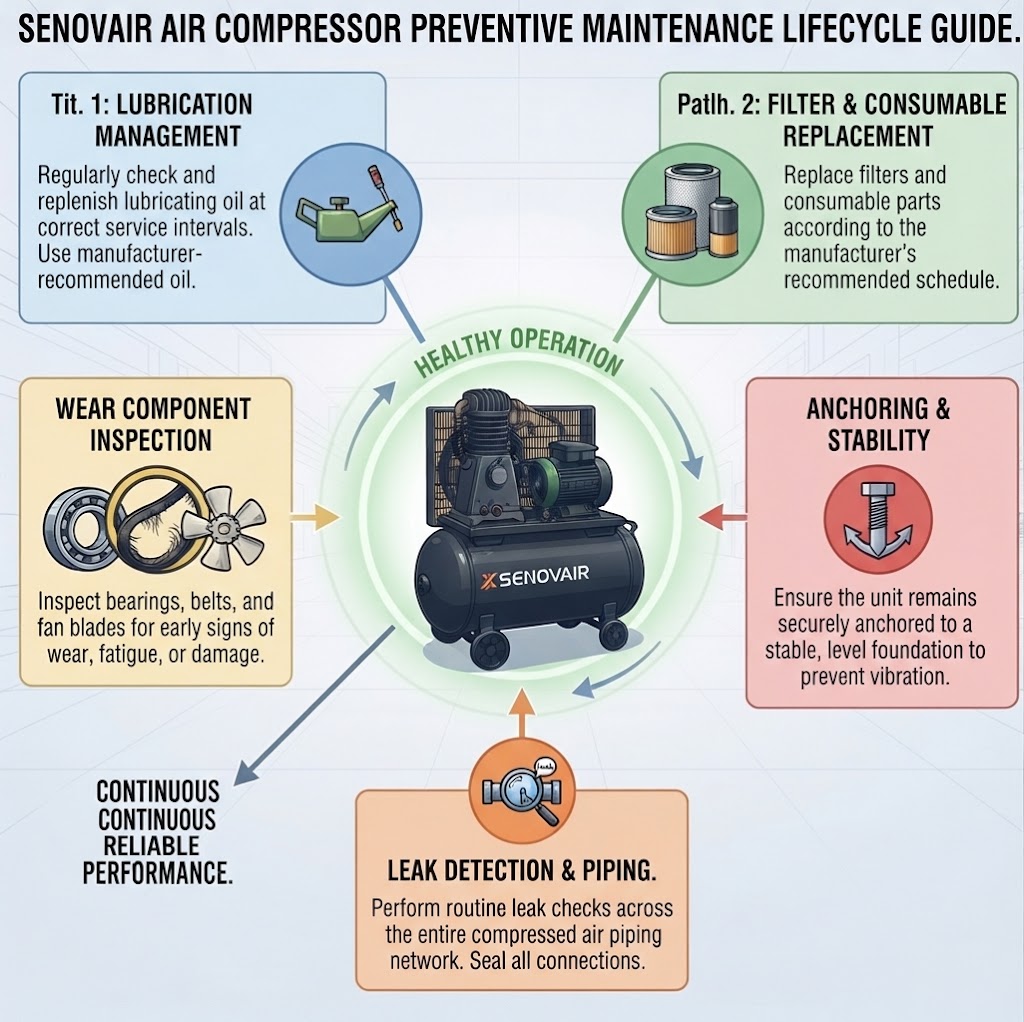
Preventing abnormal air compressor noise largely depends on establishing consistent, structured preventive maintenance habits across the full lifecycle of the equipment. This includes regularly checking and replenishing lubricating oil at the correct service intervals, replacing filters and consumable parts according to the manufacturer’s recommended schedule, inspecting bearings, belts, and fan blades for early signs of wear, ensuring the unit remains securely anchored to a stable foundation, and performing routine leak checks across the entire compressed air piping network.
Senovair brings more than 20 years of focused air compressor manufacturing experience to every system it delivers, including reliable screw air compressor and high-efficiency PM VSD screw air compressor models designed with long-term operational stability as a core design priority. The brand does not rely on one-size-fits-all configurations, and instead works closely with customers to match each installation to their specific application requirements, pressure ranges, and real-world flow demands.
Unusual sounds from your air compressor are almost never random — they are the machine’s way of sending you an early, clear warning that something inside needs attention. Each distinct type of noise corresponds to a different category of potential issue, and recognizing that difference helps you respond faster and more effectively. By staying attentive to sound changes, performing regular maintenance, and addressing problems early, operators can greatly reduce the risk of unexpected failures and avoid unplanned production downtime.