+86 18366183241


Engineering Reliability: How Industrial Air Compressors Maintain Stable Operation in Sub-Zero Climates
2026-10-21
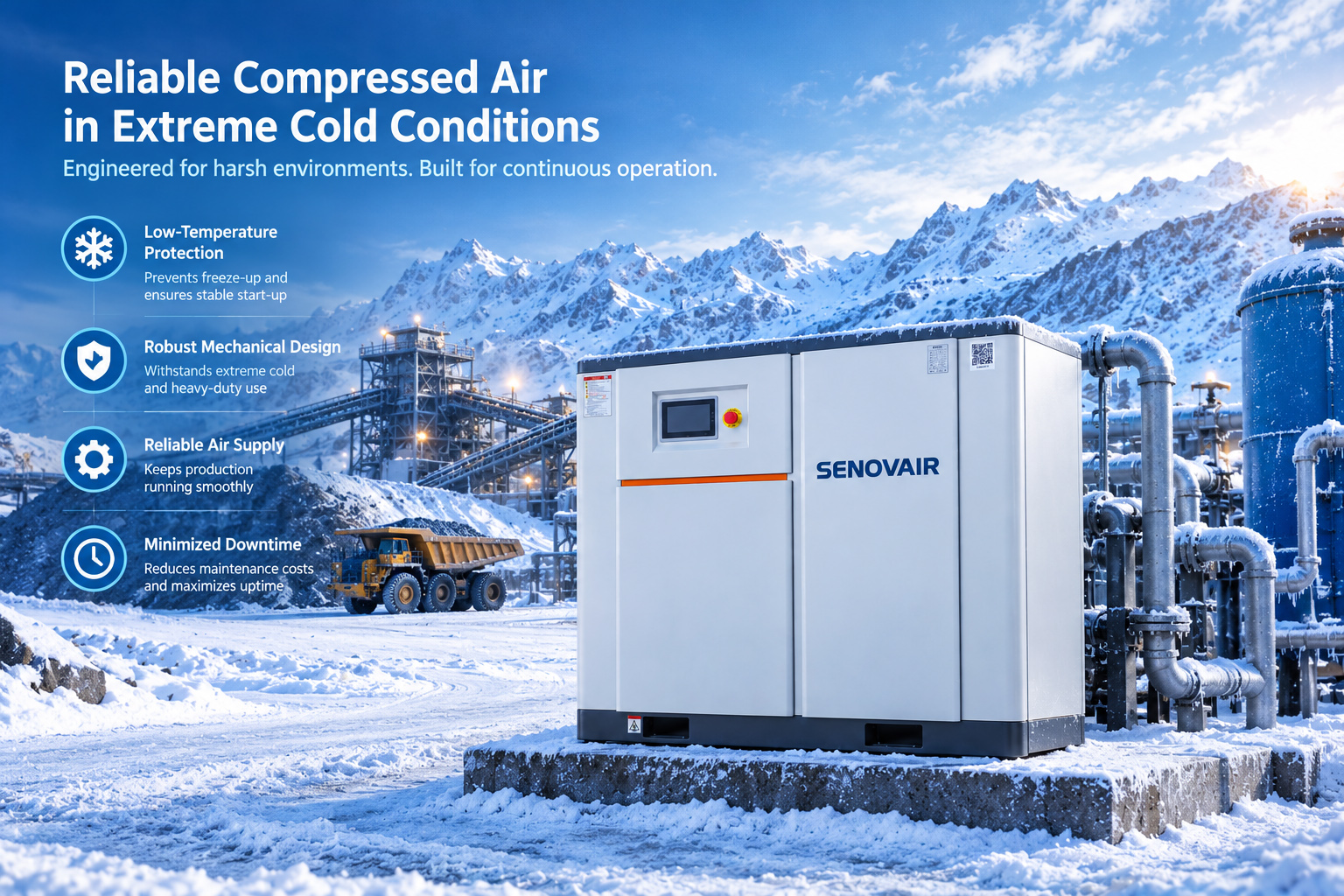
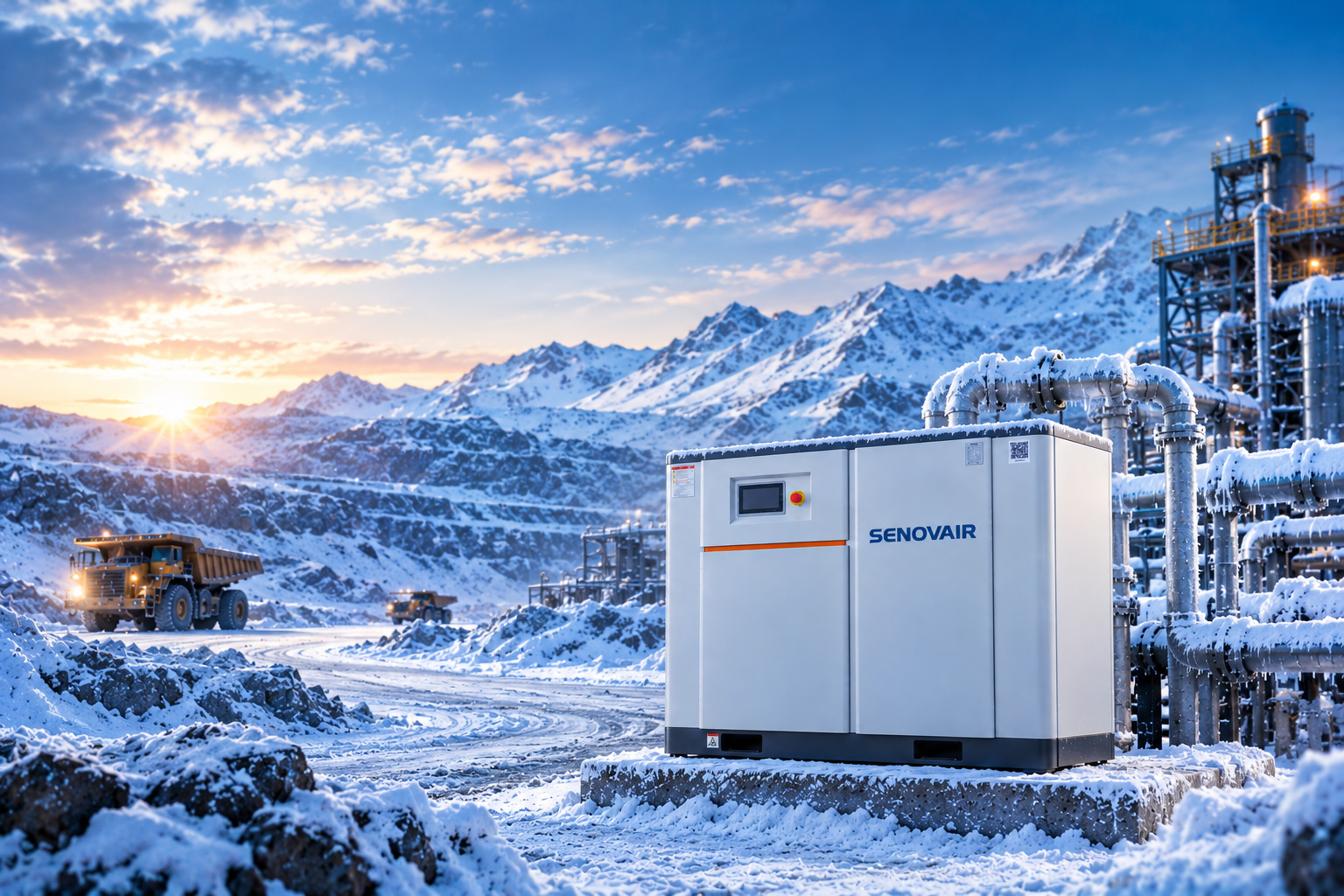
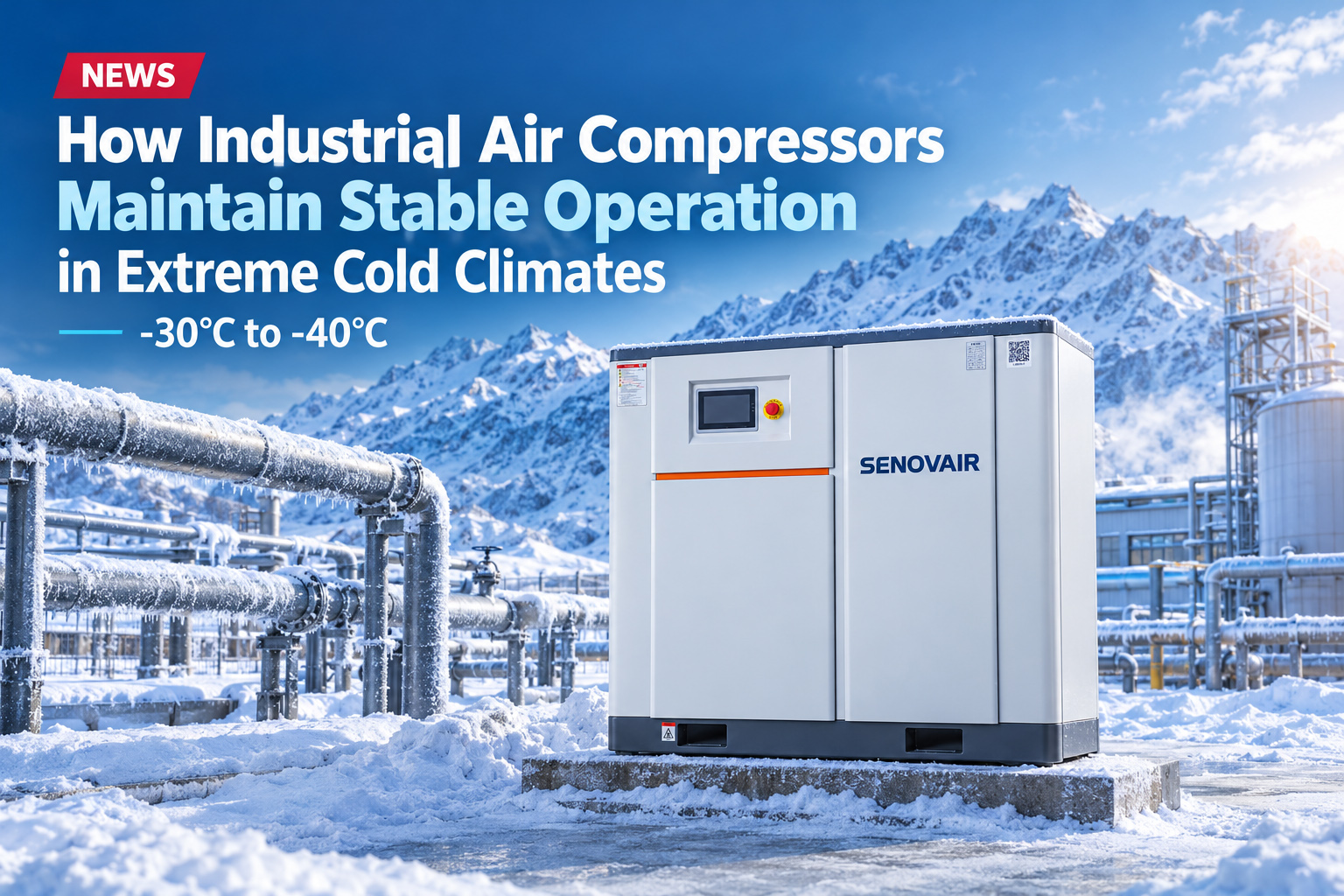
In heavy manufacturing, mining, and outdoor fabrication across cold-climate regions, winter conditions present severe operational challenges for pneumatic systems. When ambient temperatures drop below freezing—frequently reaching -20°C to -40°C during peak winter months—standard industrial compressed air systems face severe risks of mechanical failure, line freeze-up, and unplanned downtime.
For plant engineers and procurement teams, ensuring uninterrupted air supply is not just about equipment longevity; it directly impacts overall production uptime. Here is a technical breakdown of how robust system engineering and low-temperature safeguards keep rotary screw air compressors operating efficiently throughout extreme winter conditions.
1. Eliminating Cold-Start Strain on the Airend
The primary challenge in sub-zero environments occurs during startup. Standard mineral lubricants thicken significantly at low temperatures, creating massive rotational drag on the airend rotors and tripping electrical overloads.
To overcome this, cold-climate installations rely on high-grade synthetic lubricants with low pour points, paired with integrated pre-heating elements. An intelligent thermostatic bypass valve ensures that during cold starts, oil circulates through a shortened loop directly back to the compression chamber without passing through the oil cooler until optimal operating temperature is reached. This design prevents thermal shock, reduces starting torque, and maintains high volumetric efficiency from the moment the motor engages.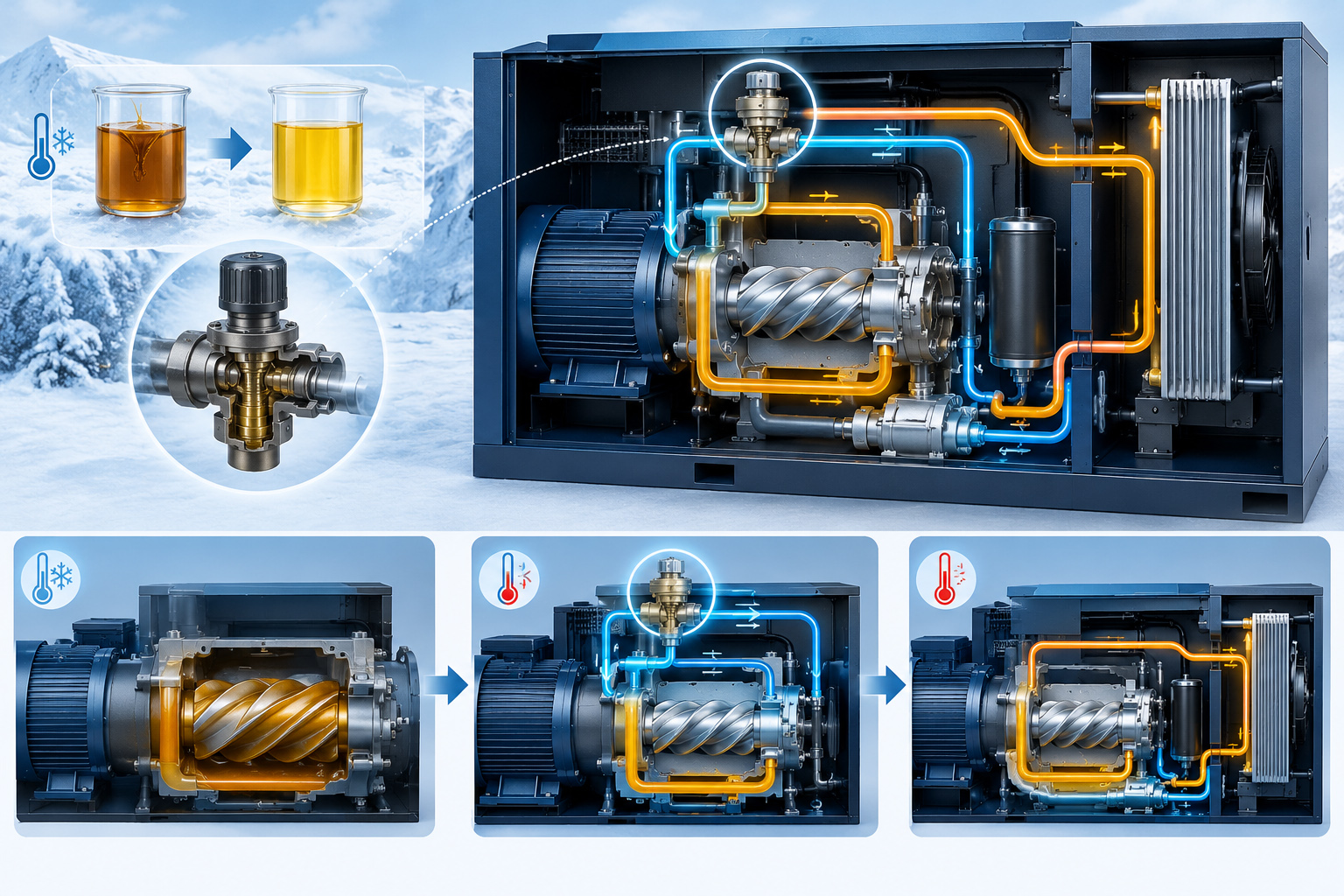
2. Condensate Management and Anti-Freeze Protection
Compression naturally generates moisture. In freezing weather, untreated condensate rapidly freezes inside moisture separators, auto-drain valves, and distribution pipework, causing catastrophic blockages and pressure drops.
Reliable cold-weather configurations incorporate heated electronic zero-loss drain valves and insulated internal piping. By preventing condensate from settling in unheated zones, the system eliminates ice formation without wasting valuable compressed air during discharge cycles, working in tandem with dedicated compressed air treatment systems.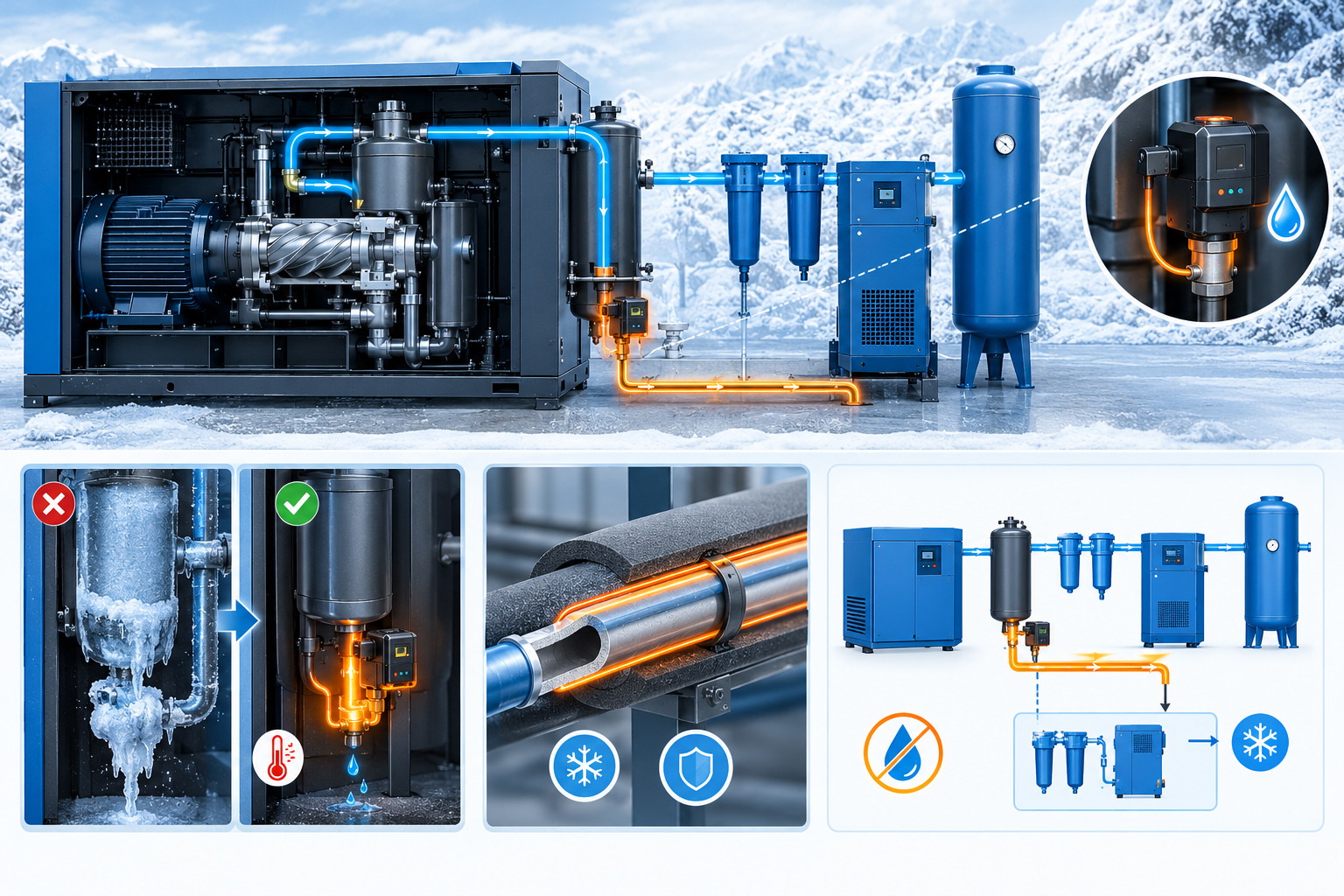
3. Smart Enclosure and Air Intake Control
Drawing sub-zero ambient air directly into a cold machine can cause the internal temperature to drop below the dew point, resulting in oil emulsification (water blending into oil), which degrades bearing lubrication.
Modern industrial compressors counter this with smart thermostatic ventilation louvers and heavy-duty, two-stage intake filtration. The system dynamically modulates internal ventilation: during initial warm-up, internal airflow is restricted to build operational heat; once stabilized, full heat dissipation resumes. This ensures internal operating temperatures remain well above moisture condensation thresholds even when external ambient temperatures plummet.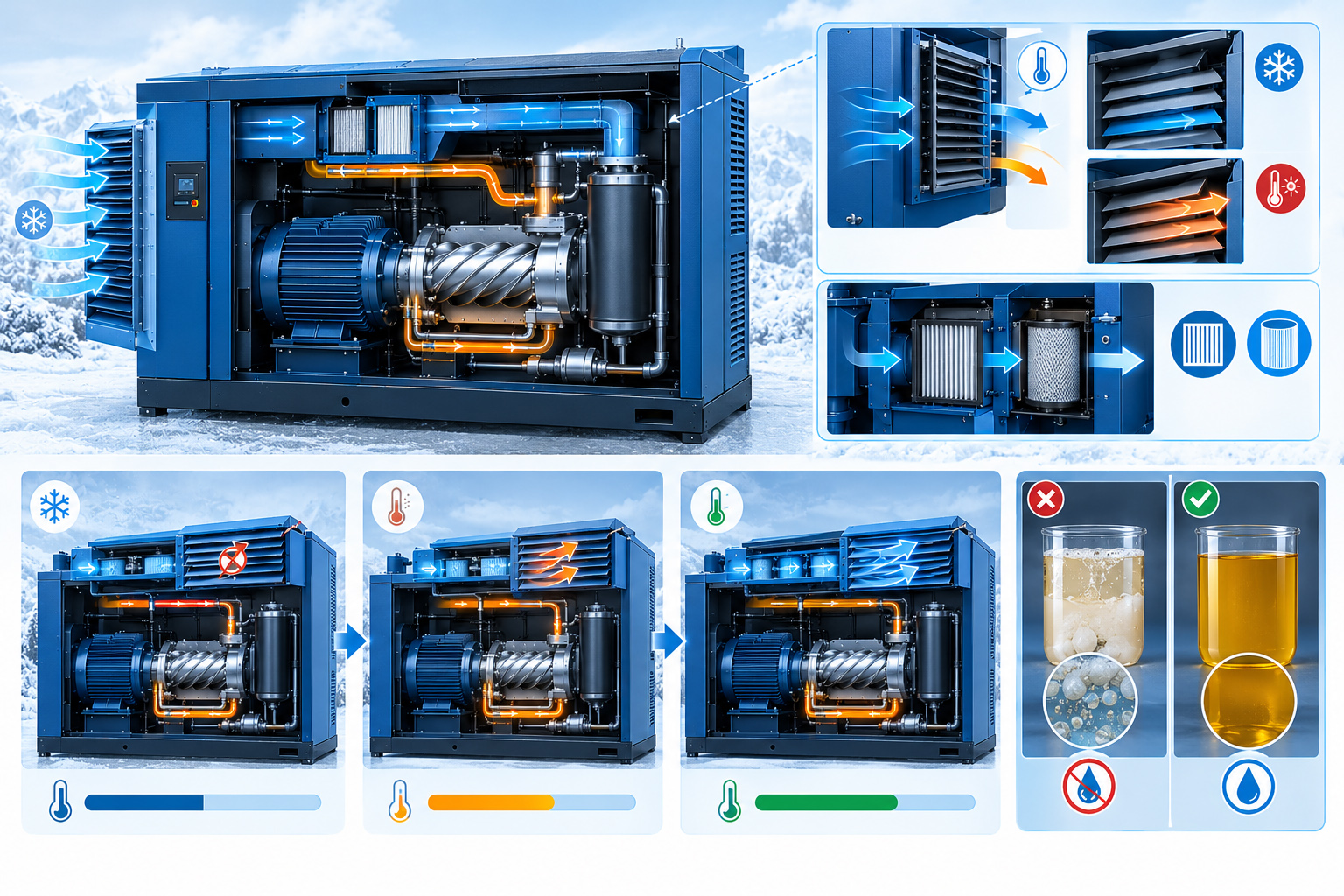
Summary: Built for Demanding Operational Conditions
Operating compressed air equipment in harsh winter climates requires more than routine maintenance—it demands purpose-engineered thermal control, heavy-duty mechanical components, and robust lubrication management.
Whether supporting continuous manufacturing lines or remote outdoor engineering projects, investing in cold-weather-adapted PM VSD screw air compressors ensures continuous uptime, lower lifecycle maintenance costs, and dependable air delivery regardless of external weather extremes.
Ready to winterize your production line? Contact our engineering team!