+86 18366183241



0102030405
Mobile Screw Air Compressors | A Guide to Portable Air Compressors for Construction Sites
2026-08-15
I. What is a mobile screw air compressor?
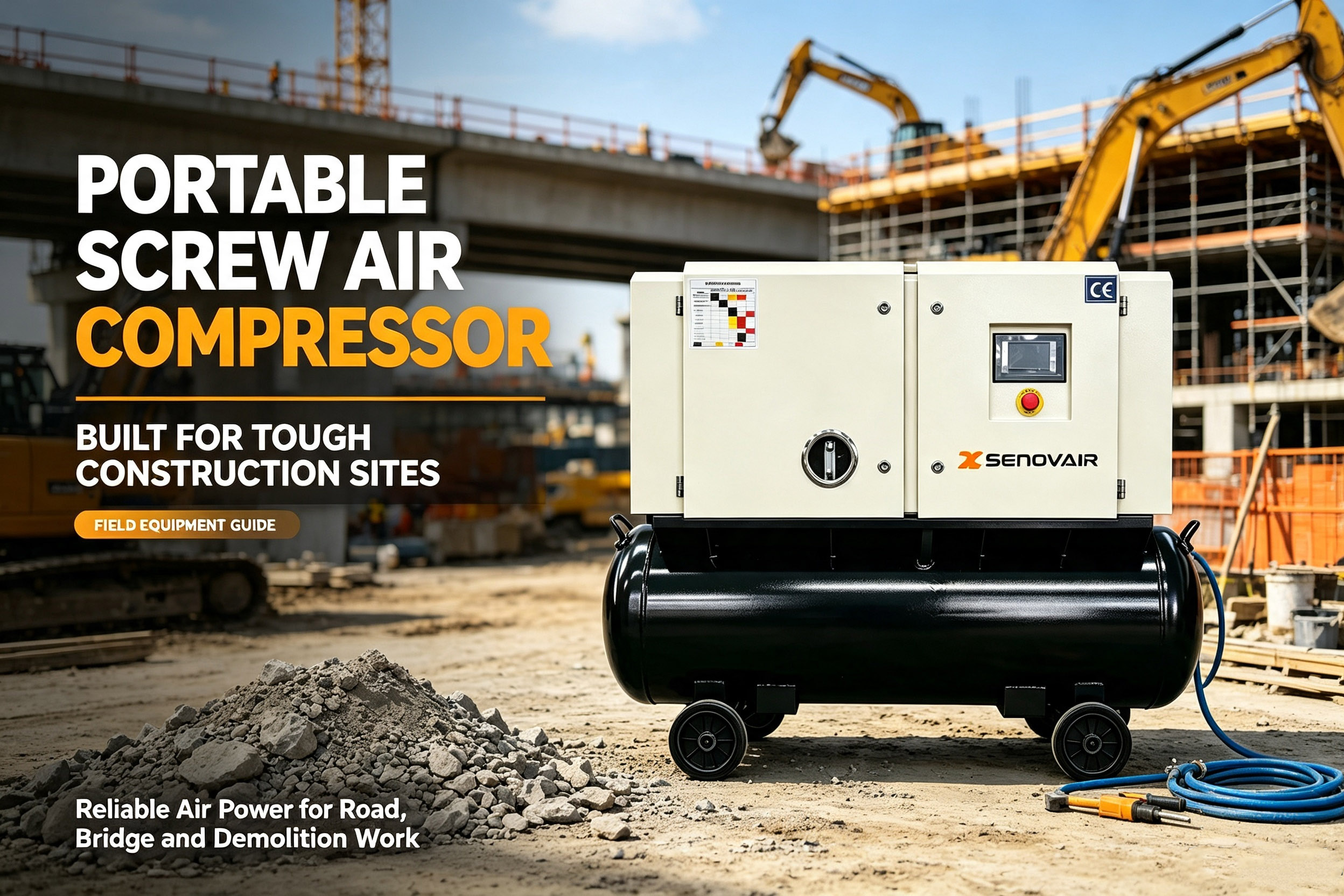
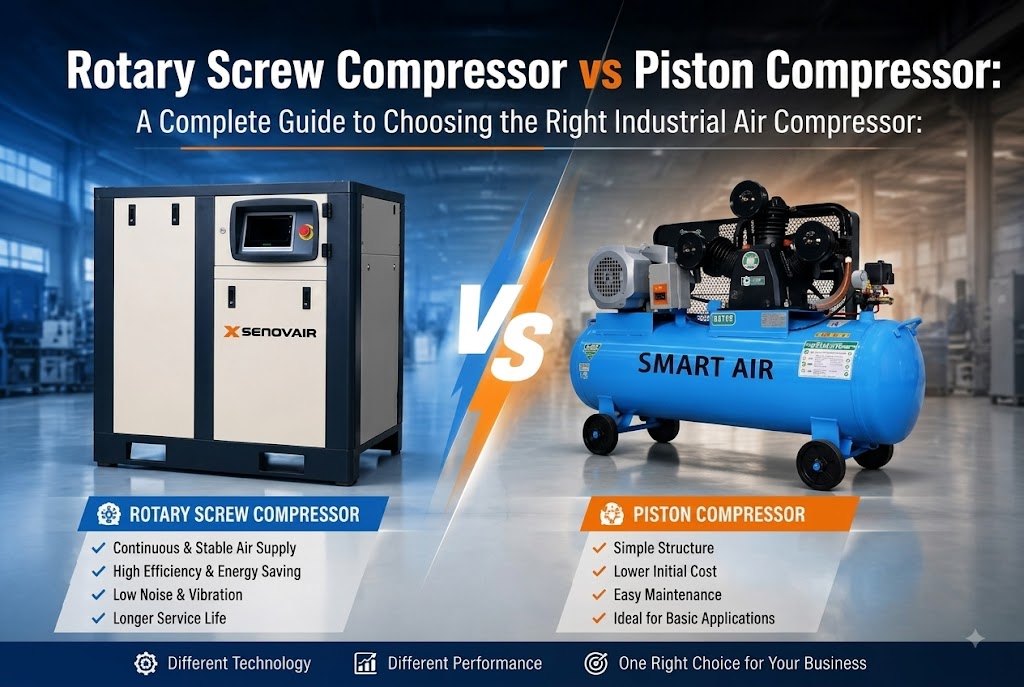
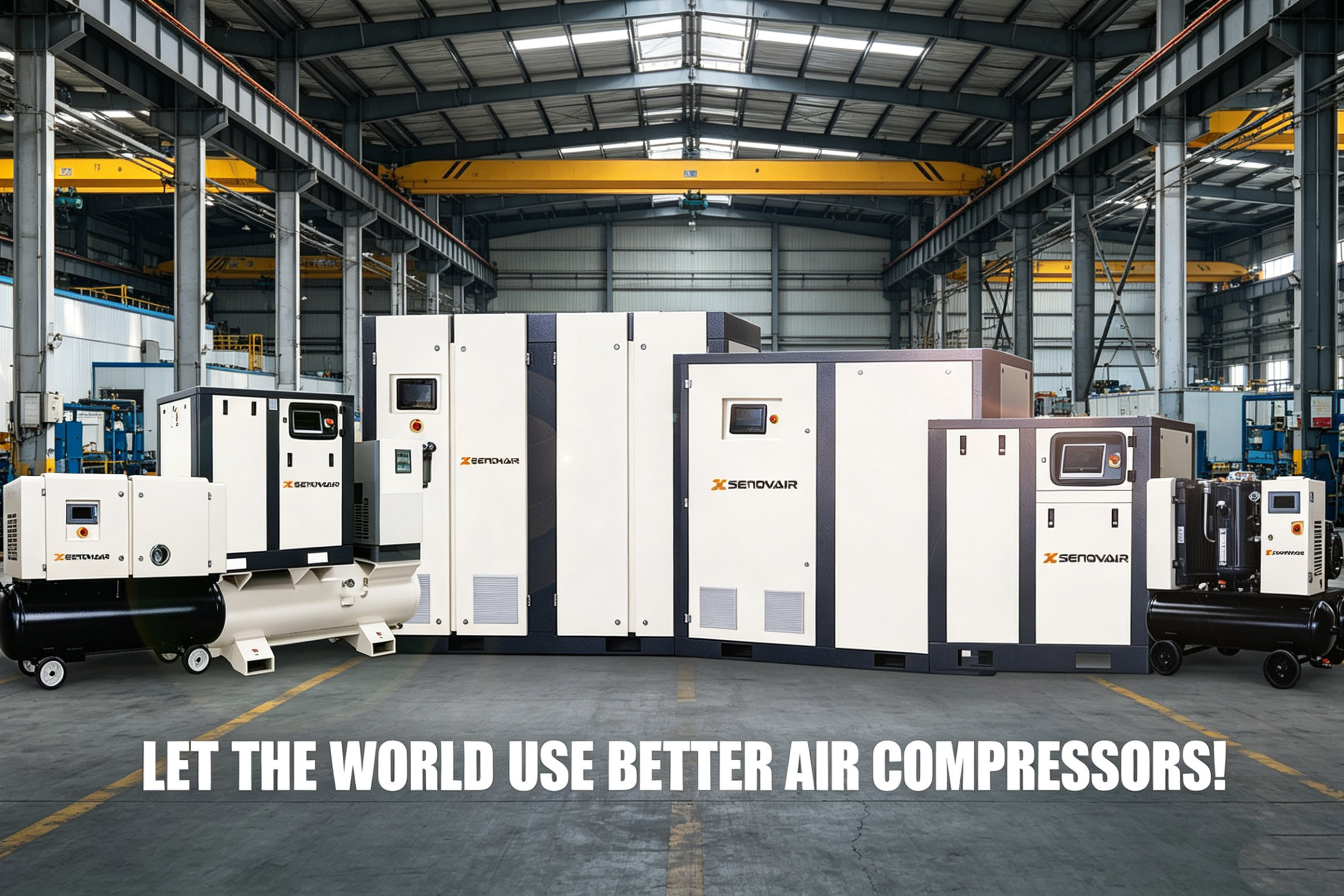
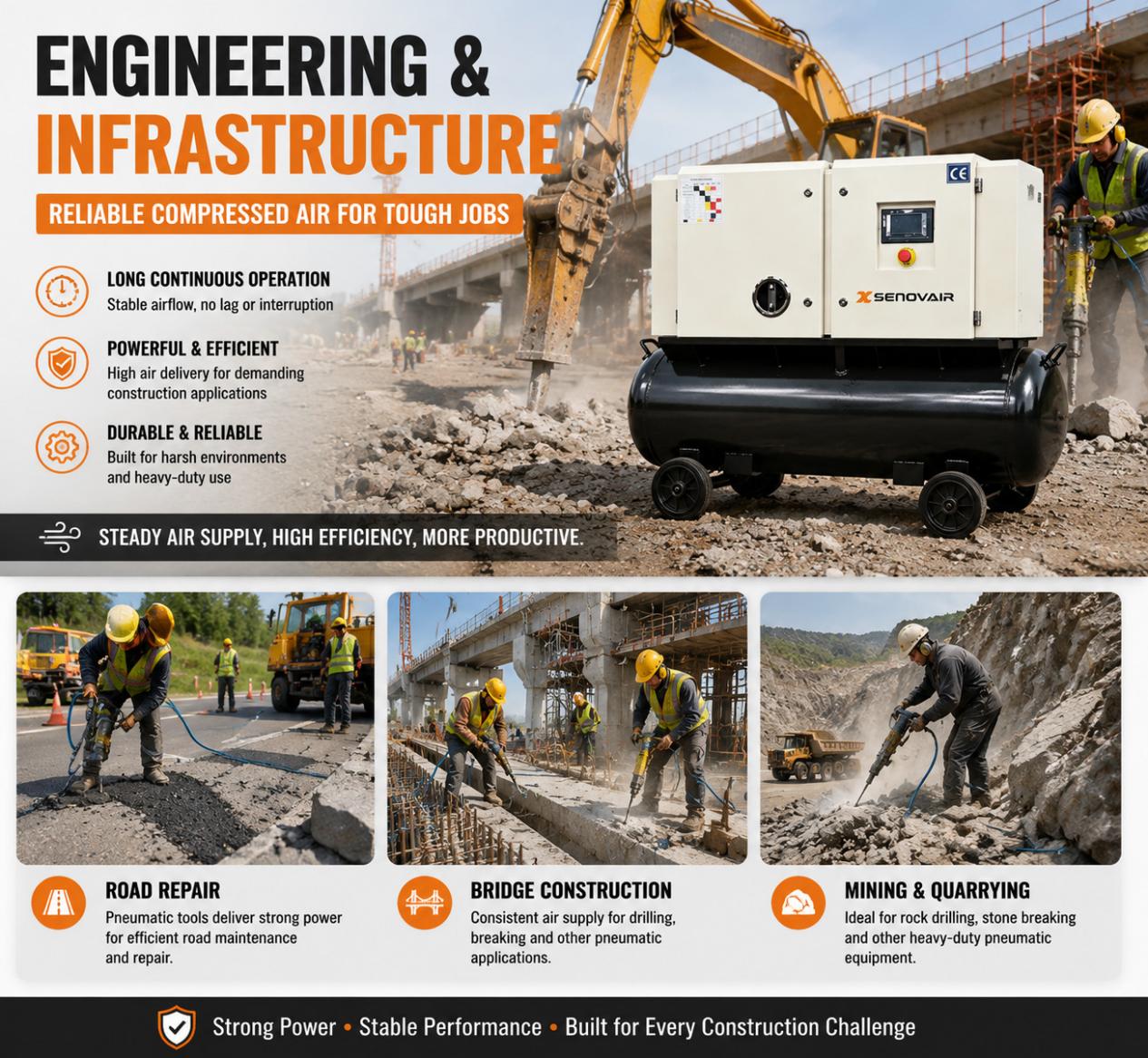
Many business owners in renovation, mining, and small-scale engineering struggle to distinguish between piston compressors and screw compressors. Simply put, a mobile screw air compressor is a compact, all-in-one unit integrating the screw air end, air receiver tank, motor, cooling system, and electrical control box. Equipped with wheels and a handle, it is easy to move around and requires no complex fixed installation. It is ideal for mobile applications such as construction sites, painting jobs, repair workshops, and temporary outdoor operations. Compared to traditional piston compressors, its key advantages include steady, continuous airflow, lower noise levels, and resistance to overheating during prolonged use—making it perfect for construction scenarios requiring uninterrupted air supply.
II. Core specifications (Industry standards)
1. Motor power
Common ratings include 4kw, 7.5kw, and 15kw; supports single-phase 220V or three-phase 380V power (compatible with industrial power grids in most countries); standard 50Hz frequency; 3000~3600 RPM motor speed; durable and reliable performance.
2. Air receiver tank capacity
Single or dual-tank configurations to buffer air pressure and prevent frequent pressure fluctuations.
3. Working pressure
Standard 10 bar; meets the requirements of most pneumatic tools, including sandblasters, paint sprayers, pneumatic drills, and air picks.
4. Mobility design
Heavy-duty, load-bearing wheels at the base allow for easy short-distance movement by a single person; no need to disassemble the equipment when moving between work areas on a site.
III. Suitable application scenarios
1. Construction and Infrastructure Sites
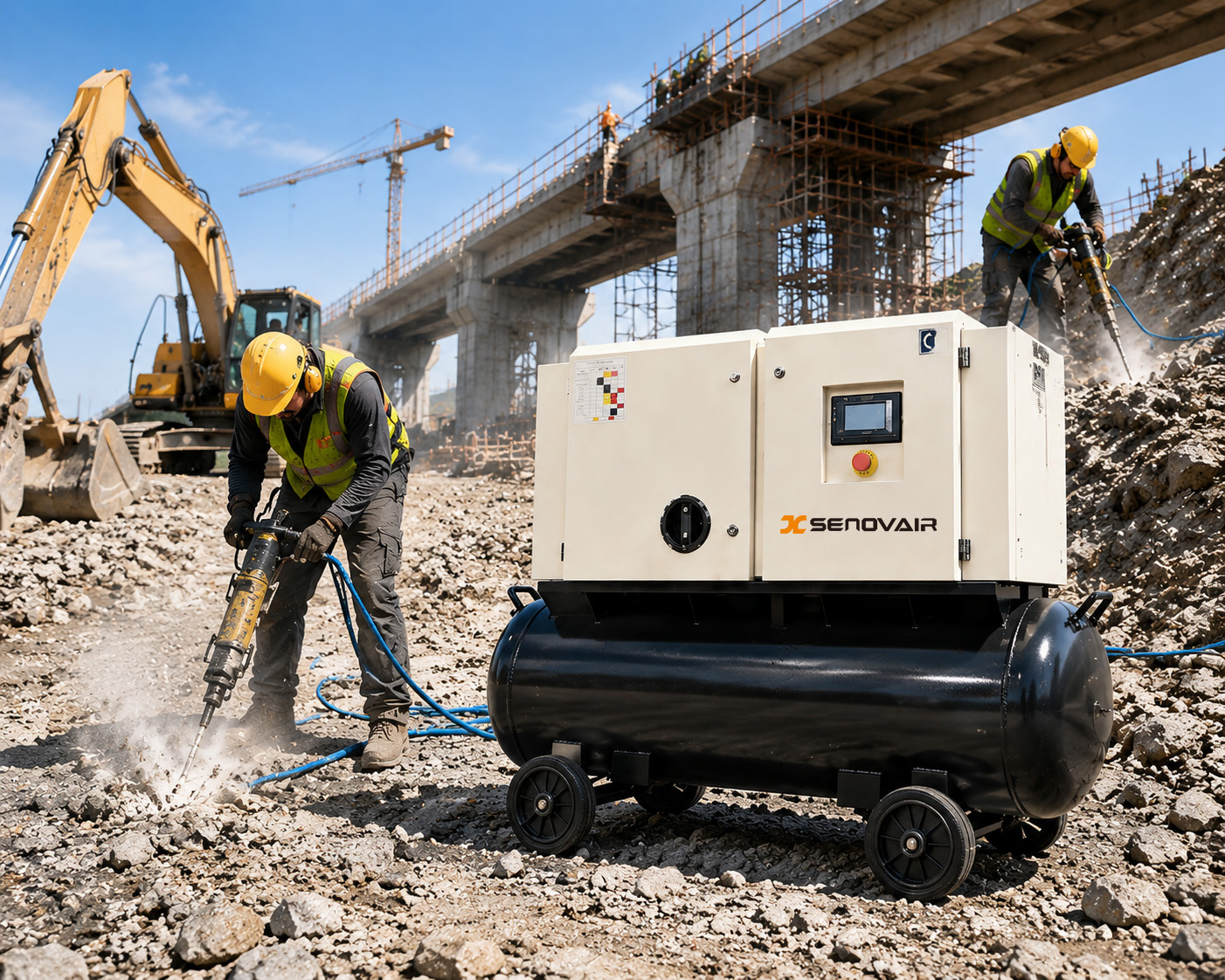
Suitable for road repairs, bridge construction, and mining operations (powering pneumatic picks and rock drills); ensures continuous, uninterrupted air supply during prolonged use.
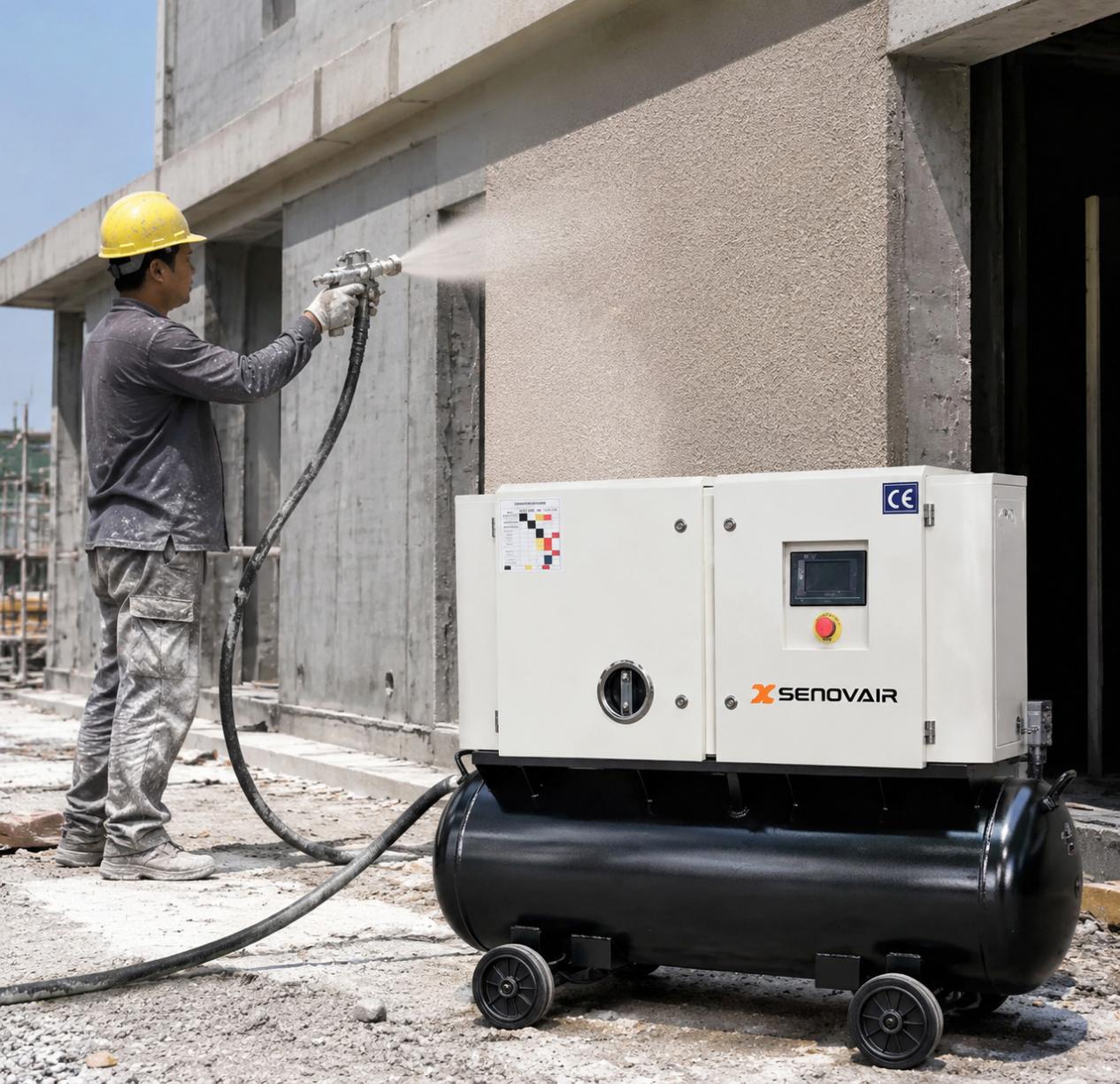
2. Stone-Effect and "Water-in-Sand" Coating Applications
Ideal for large-scale exterior wall spraying; stable air pressure ensures a uniform finish, preventing uneven coating thickness.
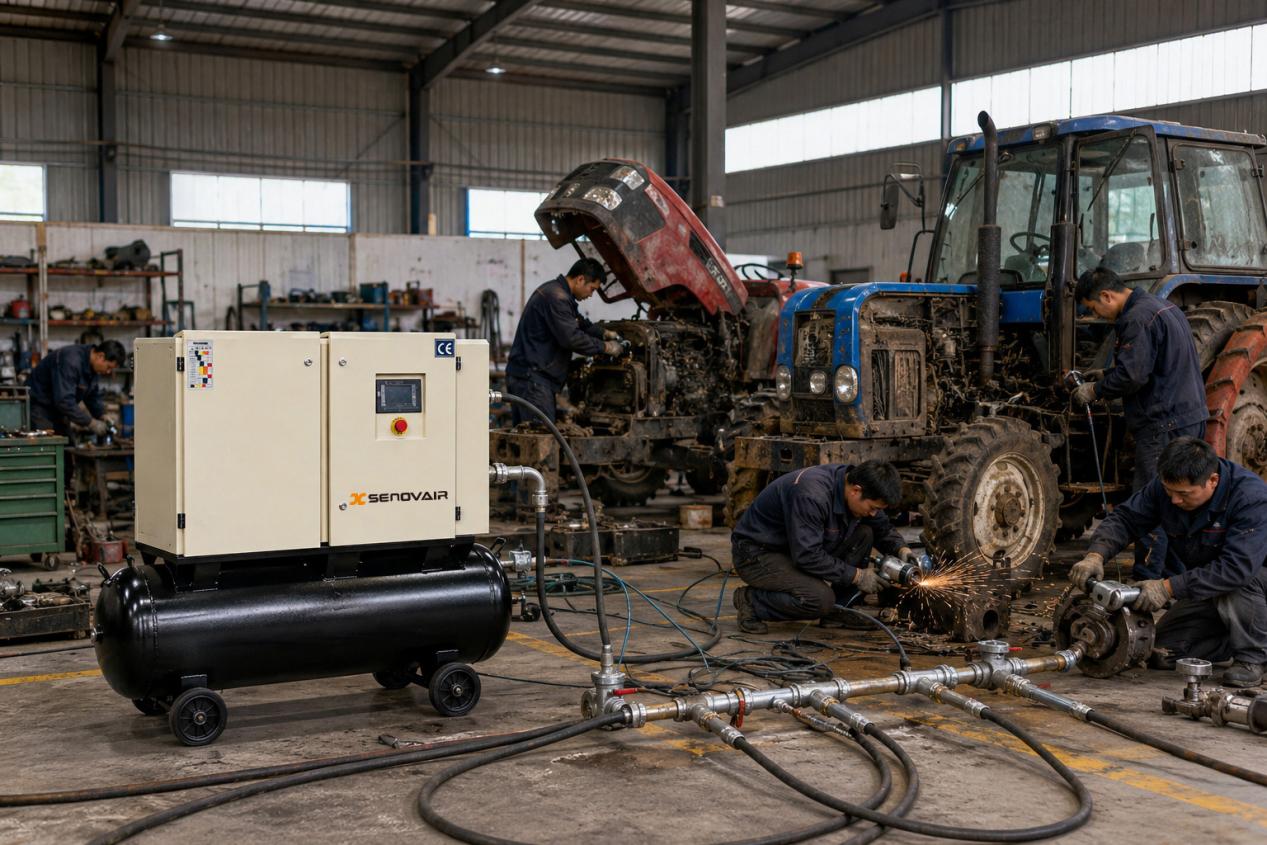
3. Small Manufacturing Plants and Agricultural Machinery Repair Shops
Supports the simultaneous use of multiple pneumatic tools; features a large air tank for sustained pressure, eliminating the need for frequent pauses to rebuild air pressure.
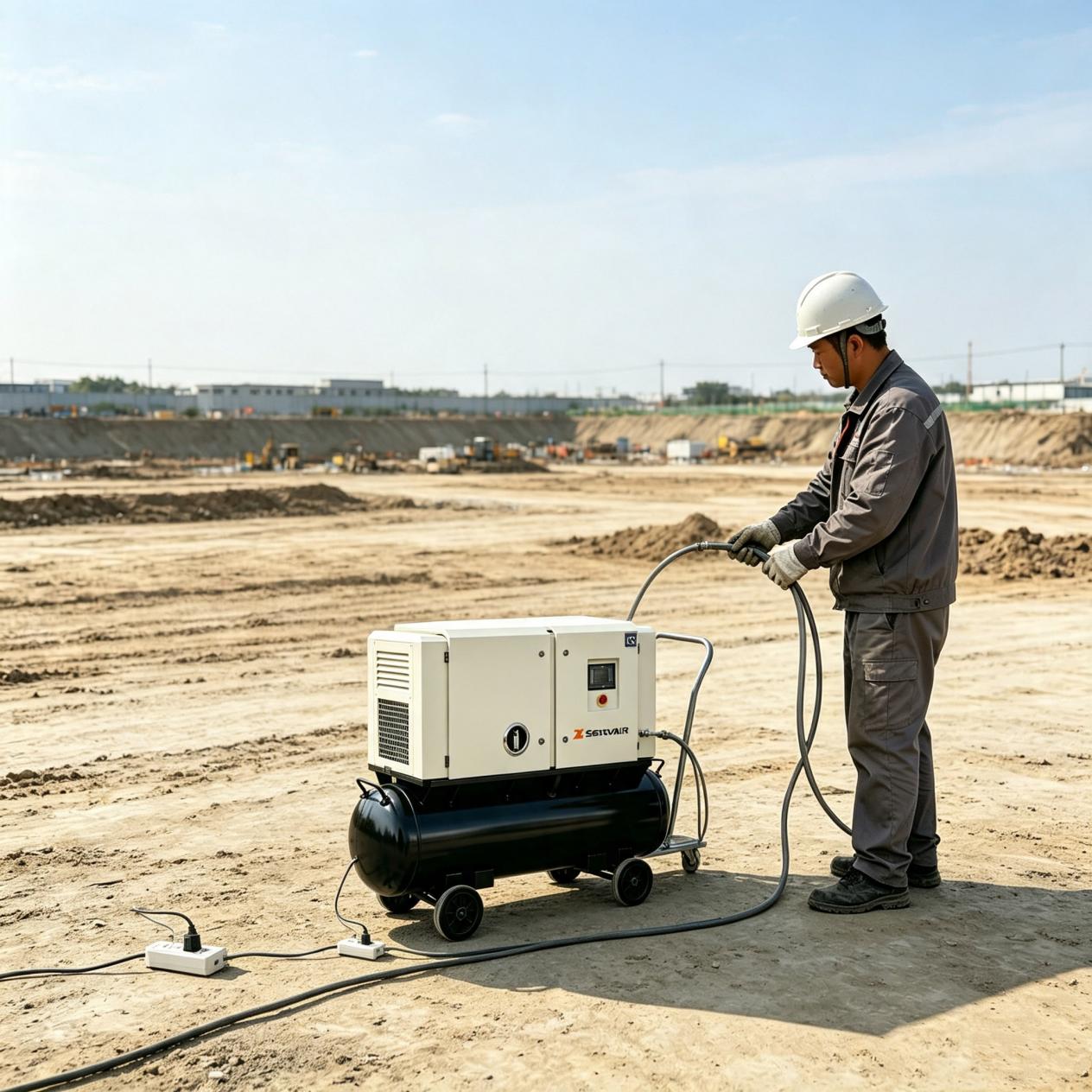
4. Temporary Outdoor Operations
No dedicated equipment room required; the unit is mounted on a cart for easy transport to outdoor work sites—simply plug in and start up for maximum portability.
IV. Three Essential Tips for Beginners (Practical Advice to Avoid Common Pitfalls)
1. Pre-start Checks
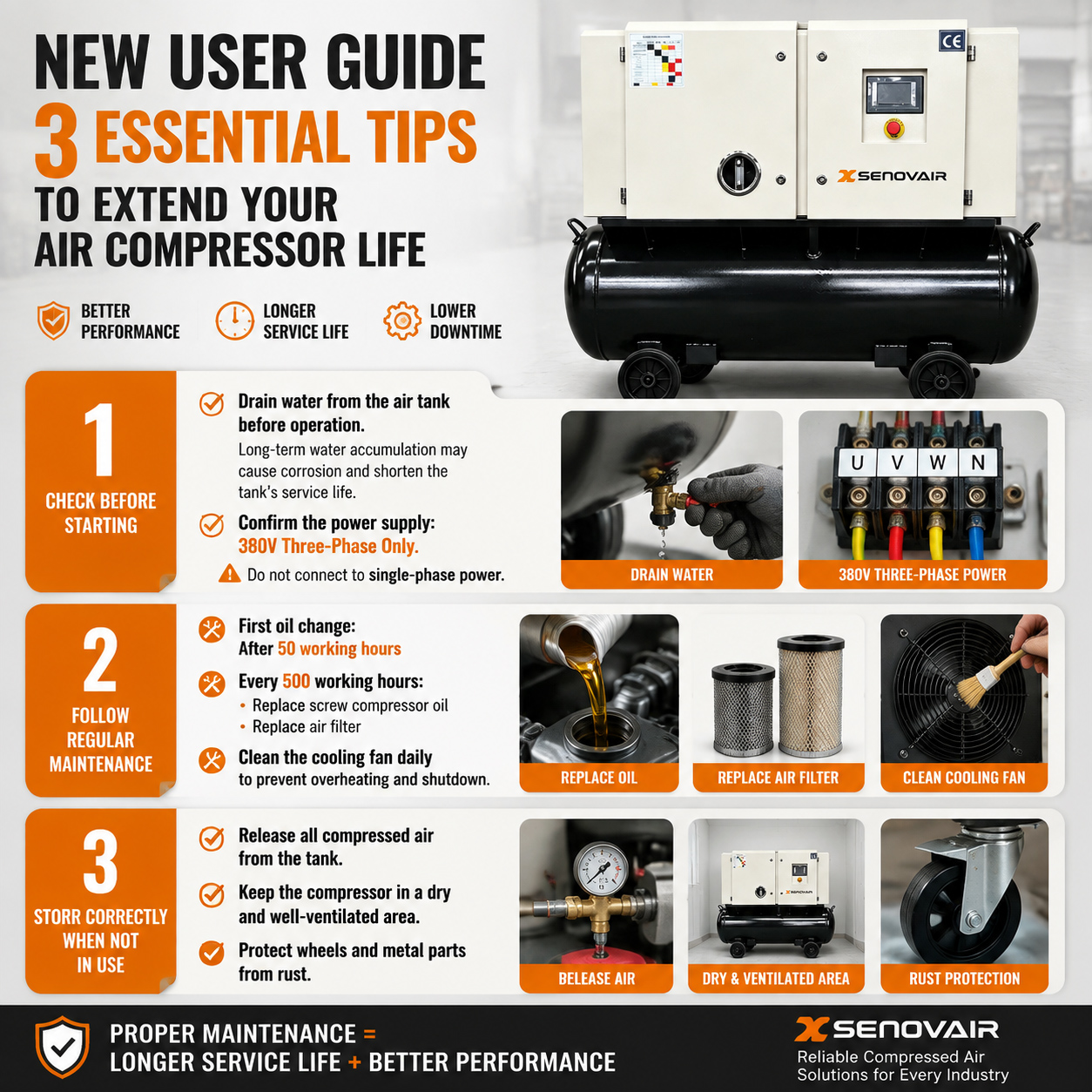
Before each startup, ensure the air tank's drain valve has been used to empty any accumulated water; long-term water accumulation can corrode the tank and shorten the equipment's lifespan. Verify that the motor voltage matches the 380V three-phase power supply; do not use single-phase power.
2. Routine Maintenance Schedule
- Change the oil after the first 500 hours of operation;
- Subsequently, replace the specialized screw compressor oil and air filter every 2000 hours;
- Clean dust from the cooling fan daily to prevent shutdowns caused by overheating.
3. Storage Precautions
When not in use for an extended period, vent all compressed air from the tank and store the unit in a dry, well-ventilated area; apply anti-rust protection to the wheels.