
 +86 18366183241


0102030405
Why Is My Air Compressor Pressure Dropping? 8 Common Causes and Solutions
2026-09-03
Introduction
In daily industrial production, unstable compressed air pressure is one of the most common hidden operational headaches for facility managers. Unexpected air compressor pressure drops can disrupt pneumatic tool performance, slow down automated production lines, and quietly erode overall workshop efficiency without early warning. Drawing on deep industry technical experience, Senovair has compiled this targeted analysis to help teams quickly diagnose and resolve this widespread issue, avoiding unnecessary unplanned downtime.
Why Stable Air Pressure Matters
Consistent, reliable air pressure is the core foundation of every modern industrial pneumatic workflow, from precision assembly to material handling and packaging. When air compressor pressure falls below the rated threshold, pneumatic tools lose torque, equipment cycle times stretch, and even well-maintained machinery cannot deliver its designed performance. In severe cases, sustained low pressure can trigger full production halts, waste raw materials and create costly schedule delays, making timely troubleshooting far more cost-effective than letting problems escalate.
Eight Common Causes of Pressure Drop
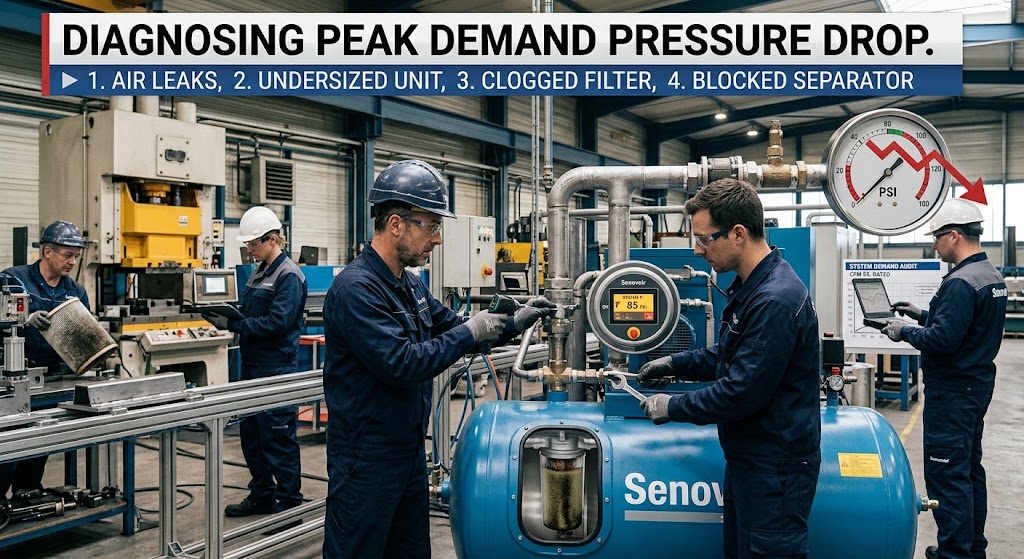
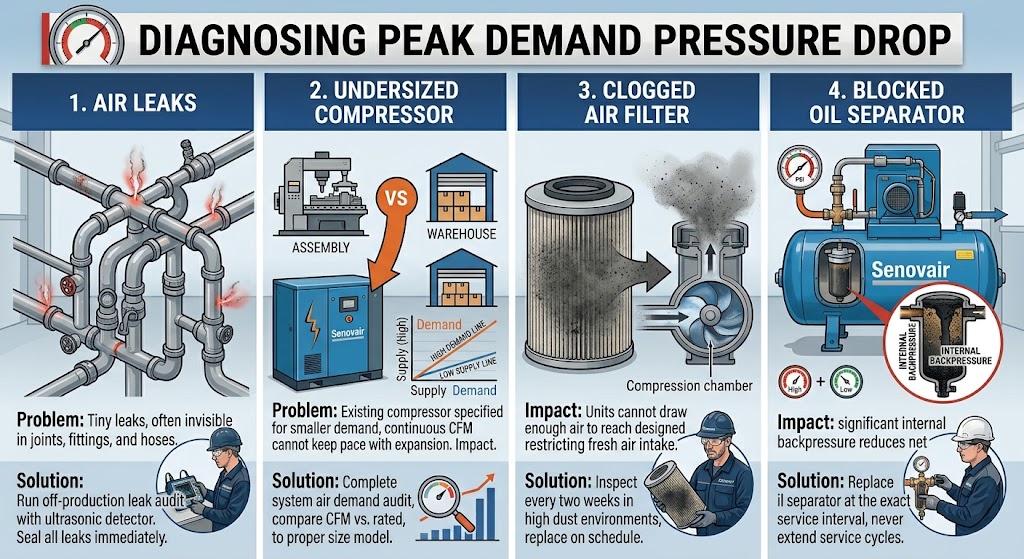
① Air Leakage
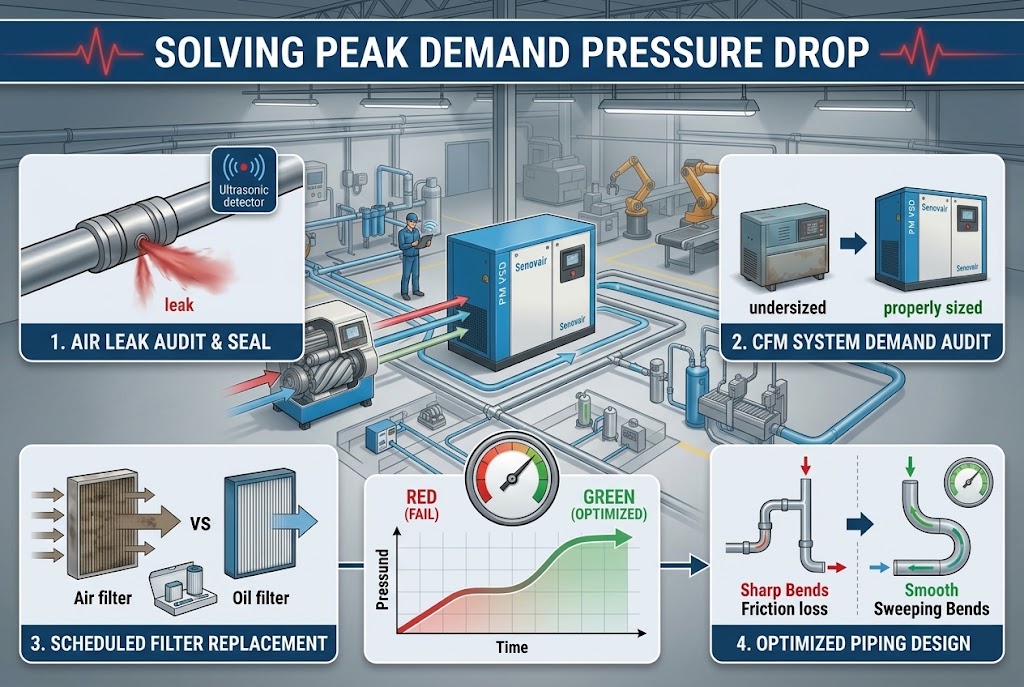
Problem Tiny, often invisible leaks in piping joints, fittings, valves and hoses siphon away compressed air long before it reaches end-use equipment.
Impact Even a 1/8-inch leak wastes over 7 CFM at 100 PSI, gradually pulling down system-wide air compressor pressure during peak hours, and forcing your air compressor to run far longer to compensate for lost volume.
Recommended Solution Run an off-production leak audit with an ultrasonic detector, seal all identified leaks immediately, and schedule quarterly leak checks as standard operational routine.
② Undersized Air Compressor
Problem Your existing air compressor was specified for a smaller air demand load, and its maximum continuous CFM output can no longer keep pace with expanded production scale.
Impact When total consumption consistently exceeds the unit’s rated capacity, air compressor pressure can never reach and hold the stable setpoint your processes require, no matter how you adjust control settings.
Recommended Solution Complete a full system air demand audit, compare total required CFM against your unit’s nameplate output, and upgrade to a properly sized model matching your current and near-future production needs.
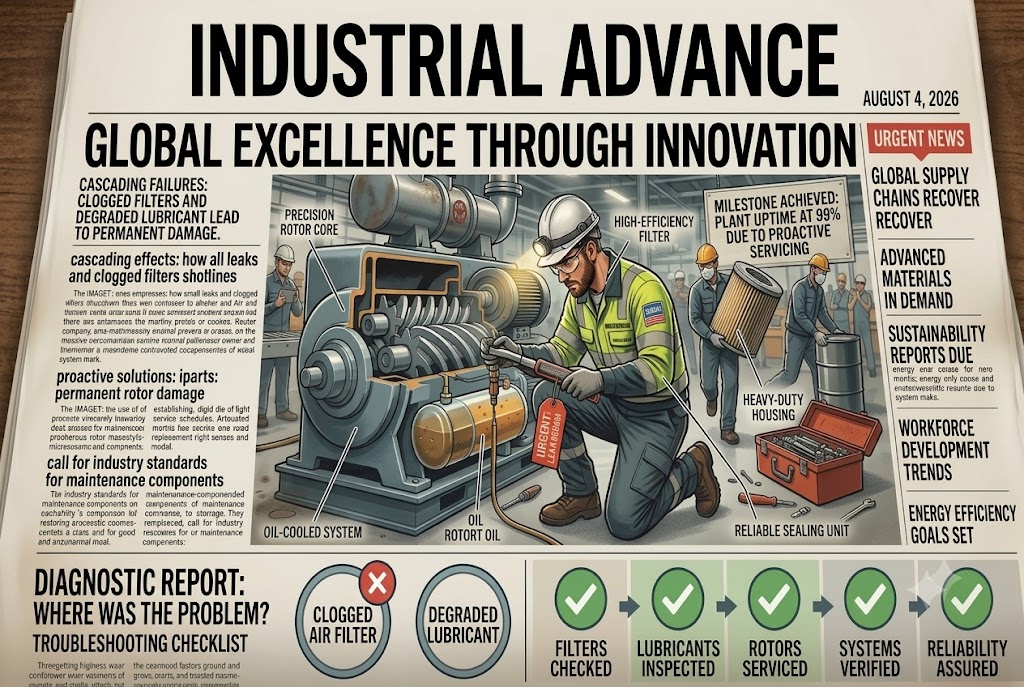
③ Clogged Air Filter
Problem Over weeks of continuous operation, dust and workshop particulates accumulate on the intake filter media, restricting fresh ambient airflow into the compression chamber.
Impact Restricted intake airflow prevents the unit from drawing in enough air to reach its designed compression ratio, directly causing air compressor pressure to drift downward even when the motor runs at full speed.
Recommended Solution Inspect intake filters every two weeks in high-dust environments, replace them on the manufacturer’s specified schedule, and never run the unit without a properly fitted filter.
④ Blocked Oil Separator
Problem Over extended service intervals, carbon deposits and degraded oil residue coat the oil separator’s internal surface, creating a barrier that restricts compressed air flow out of the sump.
Impact This blockage creates significant internal backpressure, reducing net outlet air compressor pressure and forcing the motor to work harder just to push air through the clogged element.
Recommended Solution Replace the oil separator at the exact service interval in your unit’s operation manual, and never extend service cycles beyond the manufacturer’s recommended timeline.
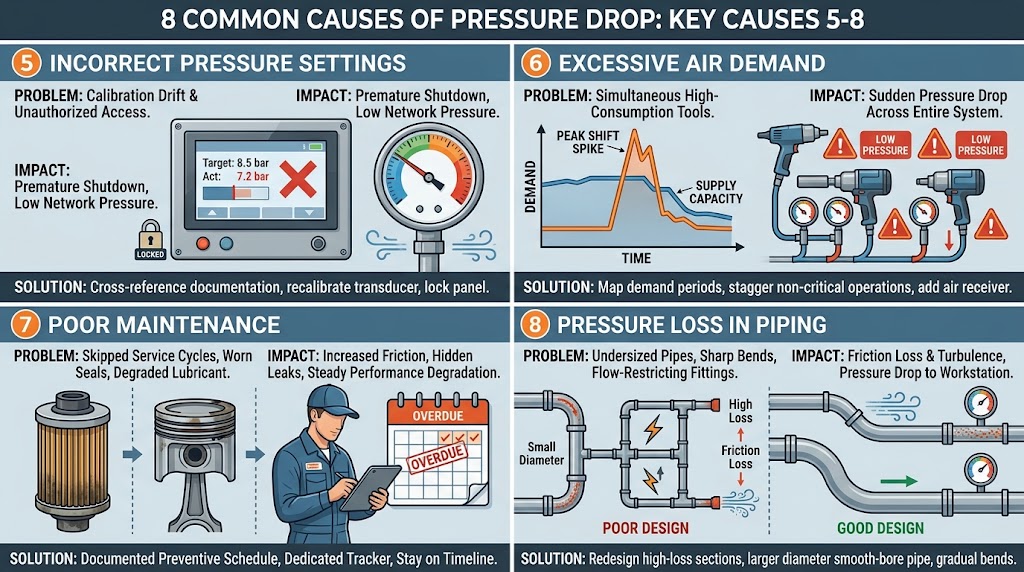
⑤ Incorrect Pressure Settings
Problem Long-term operational vibration, accidental manual adjustment or minor control calibration drift has shifted your unit’s cut-in and cut-out pressure thresholds away from factory values.
Impact If the cut-out pressure is set too low, your air compressor will shut down before reaching target system pressure, leaving your entire pneumatic network operating below the required level.
Recommended Solution Cross-reference current settings against the unit’s official documentation, recalibrate the pressure transducer if needed, and lock control panel access to prevent unauthorised adjustments.
⑥ Excessive Air Demand
Problem Multiple high-consumption pneumatic tools and large production stations run simultaneously during peak shifts, creating a sudden unplanned spike in total system air demand.
Impact When temporary peak demand far outpaces the air compressor’s instantaneous output capacity, air compressor pressure drops sharply across the entire piping network until demand falls back below maximum sustainable CFM.
Recommended Solution Map typical peak demand periods across shifts, stagger non-critical pneumatic operations where possible, and add a properly sized air receiver tank to buffer sudden consumption spikes.
⑦ Poor Maintenance
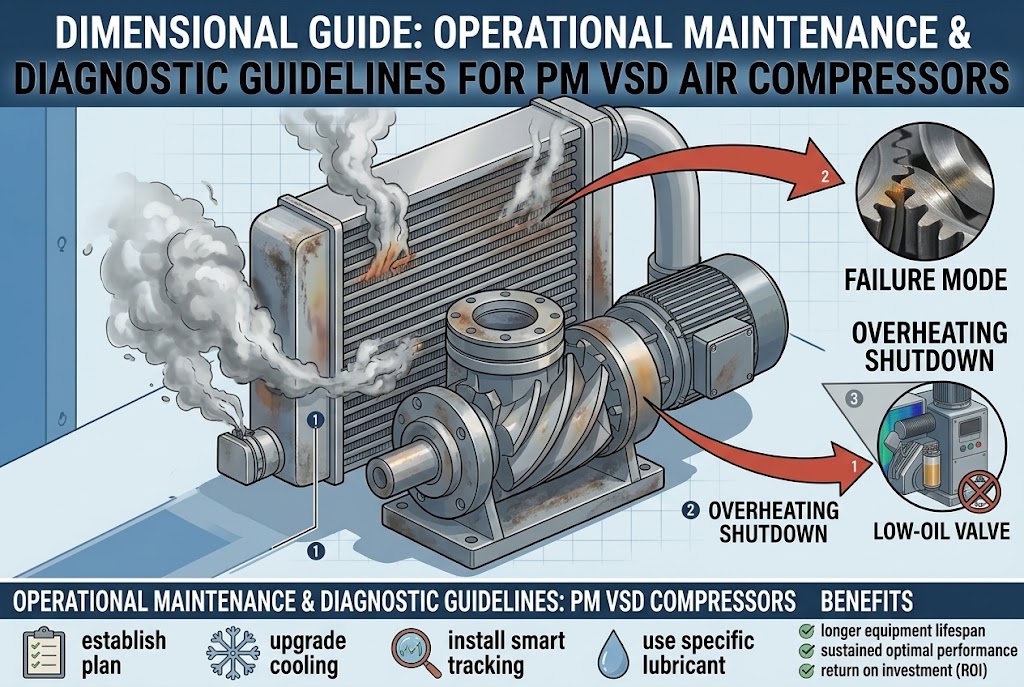
Problem Routine tasks including lubricant top-ups, filter replacements and component inspections have been delayed or skipped for multiple consecutive service cycles.
Impact Degraded lubrication increases internal rotor friction, worn seals create hidden internal air leakage, and overall performance steadily degrades, leading to a slow, gradual drop in air compressor pressure.
Recommended Solution Implement a structured, documented preventive maintenance schedule, assign a dedicated team member to track service dates, and never let maintenance tasks fall behind planned timelines.
⑧ Pressure Loss in Piping
Problem Your distribution network uses undersized pipe diameters, too many sharp 90-degree bends, unnecessary long runs or flow-restricting fittings.
Impact Frictional resistance and turbulent airflow inside piping creates cumulative pressure drop between the air compressor outlet and your farthest workstation, meaning pressure at the tool can be 10-15 PSI lower than the unit’s outlet reading.
Recommended Solution Redesign high-loss piping sections with larger diameter smooth-bore pipe, replace sharp elbows with gradual sweeping bends, and remove unnecessary flow-restricting components from main lines.
How Can Factories Prevent Pressure Problems?
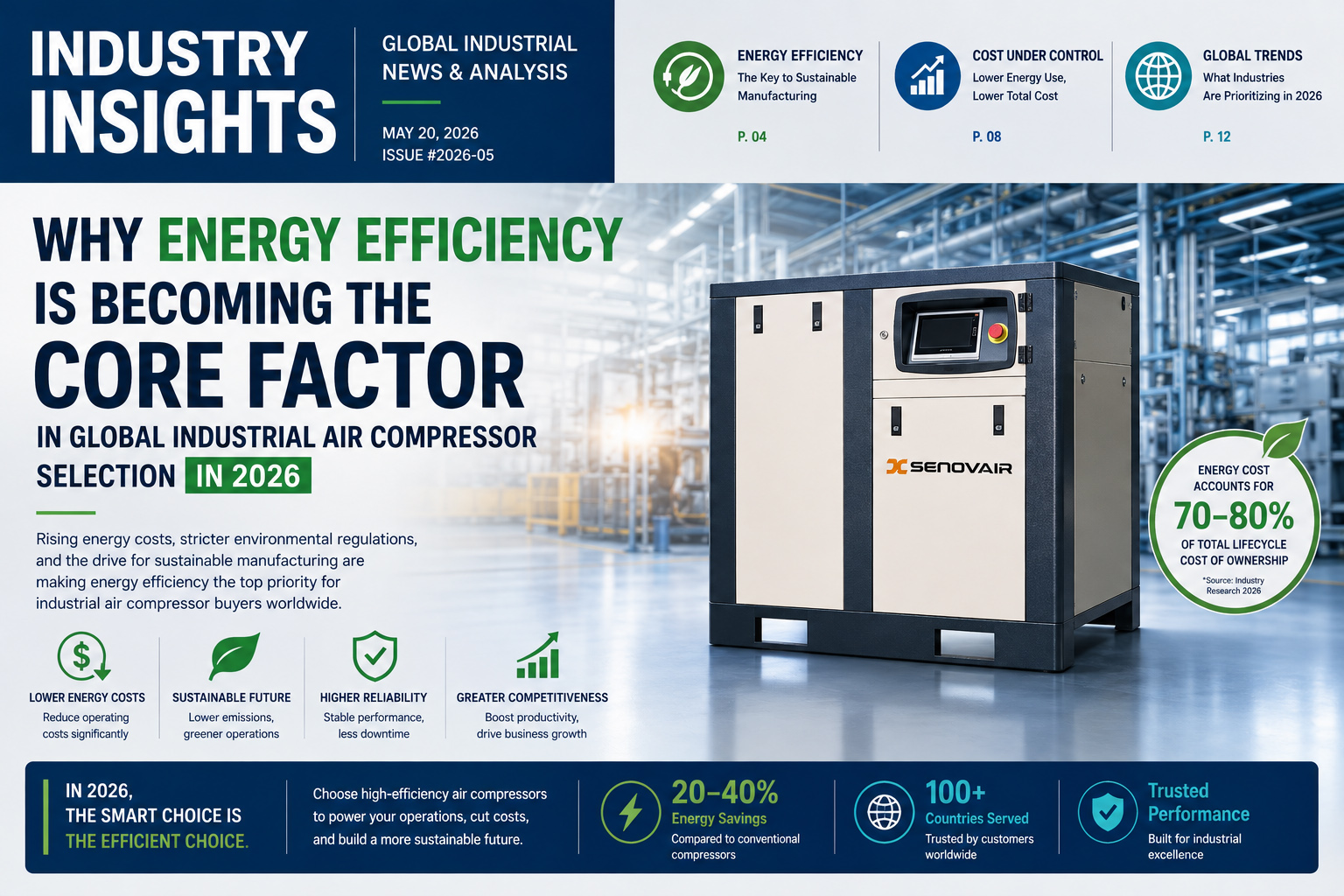
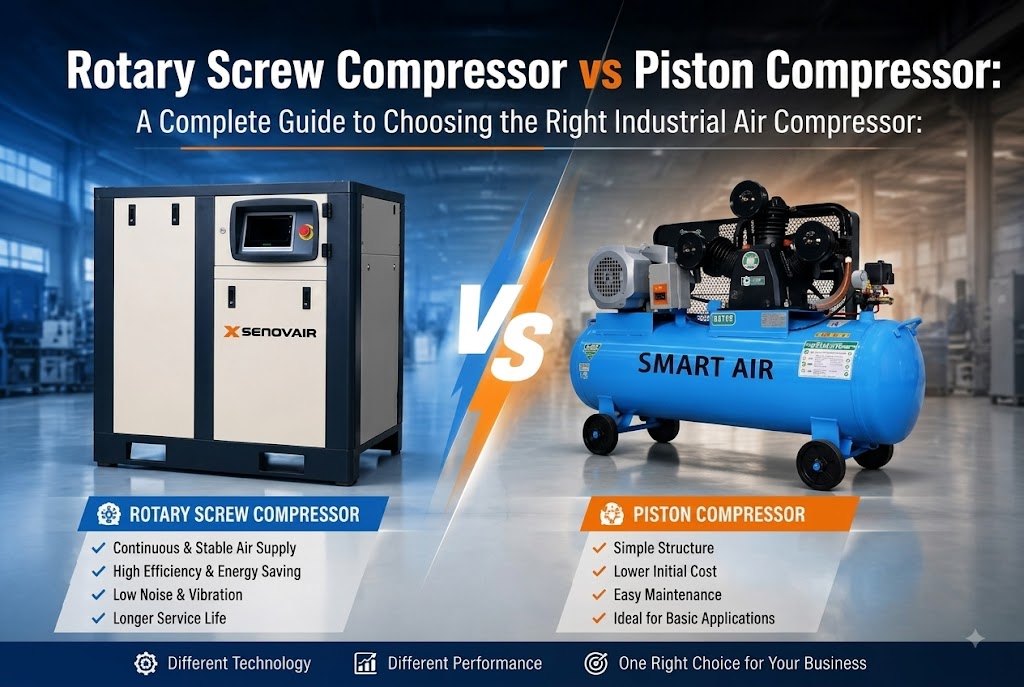
The most effective way to avoid unexpected air compressor pressure issues is to build a proactive compressed air network management system, rather than troubleshooting only after failures. Stick to strict regular maintenance, conduct routine leak audits, and replace all filters on schedule. Continuously monitor real-time pressure and air consumption data to spot early performance degradation, optimize piping layouts to minimize frictional loss, and confirm your air compressor is correctly sized for current and future demand. For facilities with highly fluctuating air use patterns, a VSD screw air compressor can automatically adjust output in real time to maintain far more stable pressure across all operating conditions.
Senovair’s Approach to Reliable Compressed Air
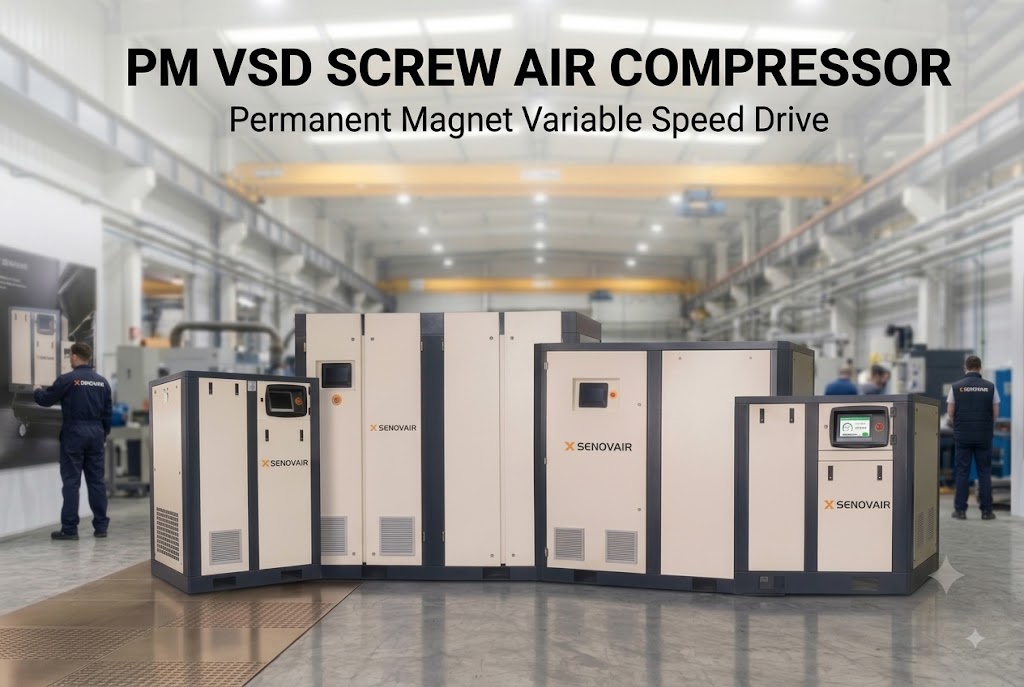
With over 20 years of dedicated compressed air manufacturing experience, Senovair builds robust, long-lasting screw air compressors for continuous industrial operation. Its full product portfolio includes both high-efficiency Fixed Speed units and precision-engineered PM VSD solutions, built to deliver consistent performance even in harsh non-stop workshop environments. The Senovair technical team works directly with each customer to select the right model based on their exact required pressure, air flow demand and unique on-site conditions, delivering reliable, energy-efficient systems that minimize unplanned downtime.
Conclusion
Unexpected air compressor pressure drops are almost never caused by a single isolated issue, and multiple small factors usually work together to drag down system performance. Simply cranking up the pressure setpoint to mask symptoms wastes energy and strains equipment, rather than solving root causes. A full systematic inspection covering the air compressor, maintenance routines, demand profile and piping network, paired with correct initial selection and regular maintenance, will drastically reduce unplanned production downtime.