+86 18366183241
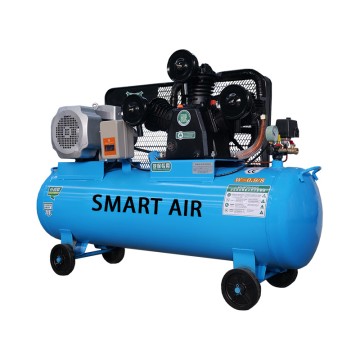
In the modern landscape of commercial real estate, high-rise office towers, large-scale shopping malls, and institutional complexes, the demand for precise environmental control is paramount. The piston air compressor for commercial HVAC and building systems remains an indispensable asset, powering the pneumatic control loops, modulating dampers, and temperature control valves that define modern indoor environments. Despite the growth of digital electronic actuators, pneumatic systems driven by reliable reciprocating piston compressors continue to hold a massive share of the market due to their unparalleled durability, high force output, and intrinsic safety in hazardous or complex building layouts.
Historically, commercial building systems relied extensively on pneumatic controls because of their simplicity and longevity. Today, we observe a hybrid ecosystem where digital controllers interface directly with pneumatic actuators, requiring a highly reliable source of clean, pressurized air. Piston compressors are uniquely suited for these applications. Unlike screw compressors that operate most efficiently under continuous, heavy loads, piston compressors excel in intermittent duty cycles. They can rapidly cycle on and off to maintain pressure in storage systems without excessive energy consumption or wear, aligning perfectly with the fluctuating demand of building automation networks.
Key Commercial Insight: A piston air compressor provides the necessary torque and pressure stability required to actuate heavy-duty fire dampers, large-scale fresh air intakes, and main chilled water valves across sprawling commercial facilities, offering an unmatched balance of cost-efficiency and mechanical reliability.
Furthermore, the commercial HVAC market is experiencing a shift toward decentralized utility rooms. Piston air compressors, with their compact footprints and modular designs, fit seamlessly into secondary mechanical rooms, penthouse fan rooms, and basement service bays. This distribution of air sources minimizes pressure drops across extensive piping networks, ensuring that critical pneumatic systems at the highest floors receive consistent pressure. As commercial property managers prioritize operational resilience, having dedicated piston compressors for individual HVAC zones has become a standard design practice.
Modern Building Automation Systems (BAS) rely on precise mechanical movements to regulate airflow and temperature. Piston air compressors supply the clean, dry, pressurized air needed to operate pneumatic thermostats, receiver-controllers, and valve actuators. When a building's central control unit commands a change in zone temperature, the pneumatic actuator responds by adjusting the position of a dampening blade or water valve. The high force-to-size ratio of pneumatic actuators, powered by reciprocating compressors, allows them to position large control valves much faster and with greater force than equivalent electric motors, which is critical for maintaining stable thermal comfort in large open-plan offices.
In unheated commercial spaces such as parking garages, loading docks, and warehouse facilities, wet pipe sprinkler systems run the risk of freezing and bursting. To prevent this, dry pipe sprinkler systems are deployed. These systems are filled with pressurized air rather than water. A dedicated piston air compressor maintains this air pressure within the piping network. In the event of a fire, the melting of a sprinkler head releases the air, causing a pressure drop that triggers the main water valve to open. Piston air compressors are the preferred choice for dry pipe systems because they can quickly pressurize the piping system after maintenance and maintain the critical holding pressure over long periods with minimal power consumption.
Large commercial HVAC systems utilize closed-loop hydronic heating and cooling systems. To accommodate the thermal expansion and contraction of water as it heats and cools, expansion tanks are integrated into the system. Piston air compressors are utilized to maintain the pre-charge air cushion inside these expansion tanks. By regulating the air cushion, the compressor prevents excessive pressure spikes that could damage boilers, chillers, and piping connections, thereby extending the operational lifespan of the entire hydronic infrastructure.
In massive commercial complexes, Variable Air Volume (VAV) systems regulate the volume of air delivered to different zones. While many modern VAV boxes use electronic controls, high-capacity zones—such as auditoriums, data centers, and clean rooms—require heavy-duty pneumatic actuators to manage massive damper assemblies. The piston air compressor provides the localized, high-pressure air supply required to actuate these heavy dampers smoothly and instantaneously, ensuring precise air changes per hour (ACH) and maintaining strict indoor air quality standards.

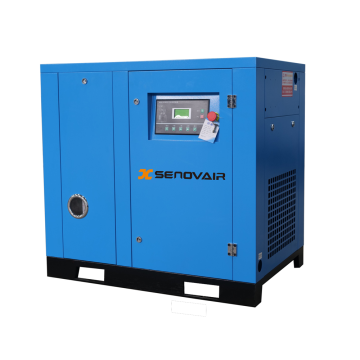
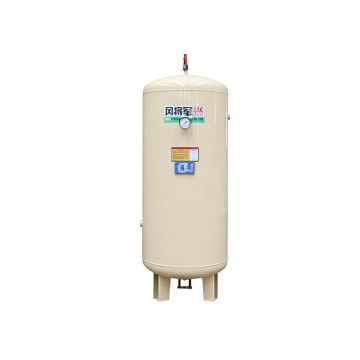
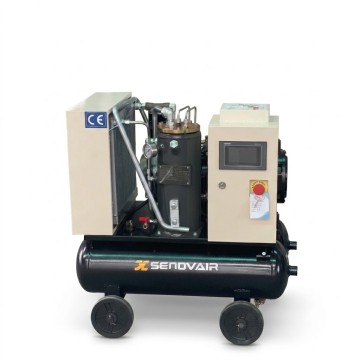
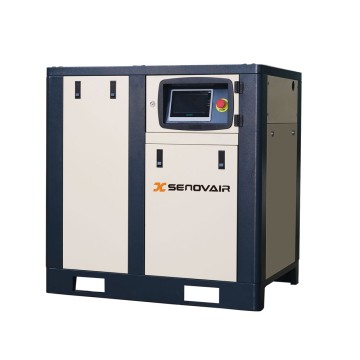
Smart Air Machinery (Linyi) Co., Ltd., established in 2005, is a diversified manufacturing enterprise integrating product research and development, production, and sales. The company employs over two hundred people and primarily manufactures screw air compressors, piston air compressors, air storage tanks, and related machinery.
Established Year
Professional Employees
As the commercial building sector pivots toward sustainability and decarbonization, HVAC components must adapt to meet strict energy targets, such as LEED certifications and ASHRAE energy standards. The development of the piston air compressor for commercial HVAC and building systems is heavily influenced by these green building trends. Modern engineering is pushing the limits of reciprocating technology to deliver higher volumetric efficiency while lowering energy consumption during idle periods.
One of the most prominent trends is the adoption of oil-free piston technology. In building automation, oil carryover from lubricated compressors can contaminate pneumatic lines, clog sensitive control orifices, and damage actuator diaphragms, leading to system failure and expensive maintenance. Oil-free reciprocating compressors utilize advanced self-lubricating materials, such as PTFE-based piston rings and sealed bearings, to deliver 100% oil-free compressed air. This eliminates the need for complex filtration systems and guarantees clean air delivery to the entire building control network, significantly improving system reliability.
Another major innovation is the integration of Smart IoT Monitoring Systems directly into the compressor packages. Modern commercial facilities operate on predictive maintenance schedules. By embedding sensors that monitor temperature, vibration, pressure, and motor current, piston compressors can communicate their health status directly to a centralized Building Management System (BMS). Facility managers receive real-time alerts before a component fails, shifting maintenance from reactive to proactive, reducing downtime, and ensuring that heating, ventilation, and air conditioning systems remain fully operational 24/7.
Tech Innovation: The integration of variable speed drives (VSD) with modern reciprocating compressors allows the unit to match its motor speed to the exact pneumatic demand of the building, eliminating the energy waste associated with frequent start-stop cycles.
Acoustic performance is also a critical focus for new installations. Since commercial HVAC equipment is often located close to occupied spaces, noise reduction is paramount. Manufacturers are designing low-RPM piston compressors housed inside sound-attenuating enclosures. These enclosures, combined with advanced vibration isolation mounts, reduce noise levels to below 65 dB(A), allowing the units to be installed in utility closets adjacent to offices or classrooms without causing disruption.
Located in Linyi, the logistics capital of China, our company has accumulated rich production experience, strong technical capabilities, a top-notch R&D team, and complete testing equipment through over 20 years of diligent research and continuous innovation.
Our products, known for their aesthetically pleasing design, meticulous material selection, exquisite craftsmanship, and superior quality, are sold worldwide and have received widespread acclaim from customers.
Smart Air is committed to building a leading brand in China's air compressor industry. We firmly implement our own brand strategy, adhere to the principle of honest business practices, prioritize customer service, continuously strengthen our production capabilities, and constantly enhance our brand influence.
We firmly believe that "quality creates reputation," "reputation creates brand," and "brand creates market." Currently, we have become a well-known and advanced enterprise in the industry.
Designing a compressed air system for commercial HVAC requires careful consideration of load profiles, air quality requirements, and system redundancy. Unlike industrial manufacturing plants where air demand is relatively constant, building systems experience highly dynamic, fluctuating demand. For instance, pneumatic control systems require a steady but low volume of air, whereas dry pipe fire protection systems require a high volume of air for initial pressurization, followed by minimal maintenance flow.
When sizing a piston air compressor for commercial HVAC and building systems, engineers must calculate the total air consumption of all connected pneumatic devices, applying a diversity factor that accounts for the reality that not all devices will actuate simultaneously. It is critical to select a compressor with a duty cycle rating that matches the application. Standard reciprocating compressors are typically designed for a 60-70% duty cycle, meaning they should run for 36 to 42 minutes out of every hour. For continuous-run applications, heavy-duty industrial-grade piston units or screw compressors should be considered to prevent overheating and premature wear.
Air treatment is another non-negotiable aspect of system design. Compressed air naturally contains moisture, which can condense in the building's piping network. In cold climates, this moisture can freeze, blocking air lines and rendering critical HVAC valves inoperable. To prevent this, the compressor station must include a downstream air dryer—typically a refrigerated dryer for indoor piping networks, or a desiccant dryer for outdoor or unheated areas. High-efficiency coalescing filters must also be installed to remove oil vapors and particulate matter, ensuring that the air reaching the building automation controllers is dry, clean, and instrument-grade.
Finally, redundancy is essential for critical building operations. In large commercial facilities, a duplex compressor system is standard practice. A duplex system features two independent piston compressors mounted on a single receiver tank. During normal operation, the compressors alternate leads to ensure equal wear. In times of peak demand, or if one unit requires service, the second compressor automatically starts, ensuring uninterrupted air supply to the building's HVAC and safety systems.
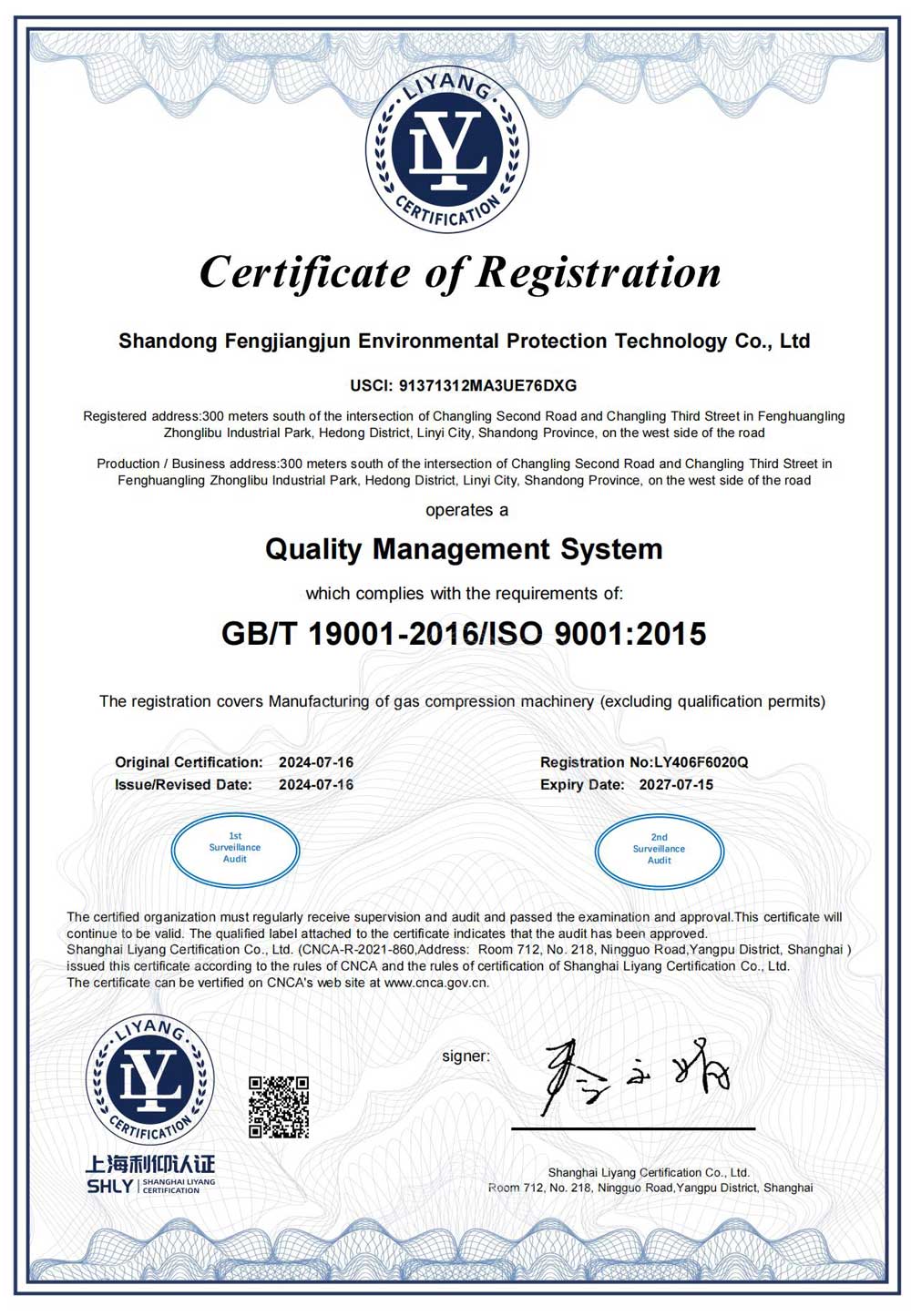
Since its establishment, the company has successively received numerous honors, including "China Famous Brand," "China's Preferred Brand for Green and Environmentally Friendly Products," "Top Ten Foreign Trade Enterprises in the Mall," "High-Tech Enterprise," "3A Credit Enterprise," and "Civilized and Trustworthy Unit."
We will always uphold our commitment to warm hospitality and attentive service, and we welcome domestic and international business partners to discuss cooperation.
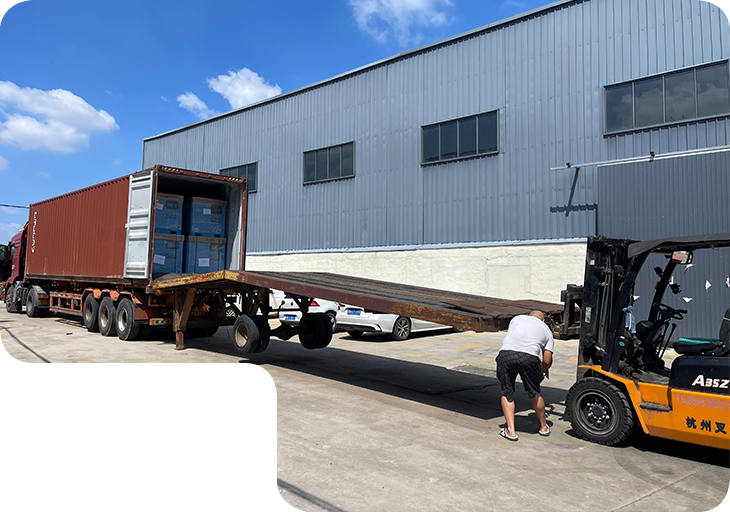
With a proven track record of successful collaborations in over 20 countries, including the USA, Canada, Colombia, Chile, Australia, New Zealand, Russia, Indonesia, Vietnam, Malaysia, India, Sri Lanka, Bangladesh, Pakistan, Dubai, Afghanistan, Israel, Syria, Kosovo, Tunisia, and Angola, we are committed to meeting the diverse needs of our clients. At Smart Air, we pride ourselves on delivering tailored solutions that adhere to the highest standards of quality and performance. Our customers consistently express their satisfaction with our products, praising their reliability and efficiency. Join the growing list of satisfied clients who trust Smart Air for their air compression needs. Experience excellence with us today!